





Design

Contents |
[edit] Introduction
Design is the realisation of an idea, or the resolution of requirements, through means of communication such as drawings, plans, specifications and models. These can then be used to enable items to be created or issues resolved.
Design can be seen as an iterative process where, at each iteration, there are inputs, there is a design process and then there are outputs. At the end of each iteration, the outputs are reviewed and then the process may have to begin again.
Whilst the objective of some design processes may include an aesthetic outcome – as say in painting, architecture and photography – this is not always the case. For example, the design of a manufacturing component may require a completely functional response that is driven by speed, performance and cost.
[edit] Design of buildings
In order to create a harmonious solution, the building design process must rationalise a series of different and sometimes contradictory requirements that include aesthetics, the brief, budget, structure, regulations, climate, weather, security, privacy and so on. This process can be supplemented by the adoption of specific design principles such as; balance, unity, movement, emphasis, contrast, space and alignment, or by the adoption or pre-existing stylistic solutions. For more information, see Design principles and Architectural styles.
When considering buildings, it is extremely difficult to describe what the design process actually is. While it can be relatively easy to explain from contractual and technical perspectives, as a series of stages through which the level of detail increases – and fairly straight forward to describe the output of design in terms of drawings, styles, typologies, or components, the creative process itself remains elusive. Matters are further complicated by the fact that the approach designers say they take to design is very often different to what they actually do.
For more information see: Design methodology.
Questions that may be asked about the design process include:
- How does the design itself emerge?
- What are the inspirations?
- What are the thought processes that move the design from a blank piece of paper or an empty computer screen to a completed design that a contractor can build?
- To what extent is the process creative?
[edit] Design stages
Building projects are generally divided into a series of stages. This helps define payment milestones, information deliverables, decision points, the need for new appointments and so on. The RIBA Plan of work proposes the following stages:
- 0 - Strategic definition.
- 1 - Preparation and brief.
- 2 - Concept design.
- 3 - Developed design.
- 4 - Technical design.
- 5 - Construction.
- 6 - Handover and close out.
- 7 - In use.
Some stages are more creative than others. The concept design stage is generally considered to be the first, and most creative design stage, however this can be a relatively small part of the overall project. It is preceded by a host of non-design activities, such as business planning and justification, brief development and feasibility studies, and it is followed by design development, technical design, procurement and construction, which may again be largely non-creative.
For more information see: Design stages.
[edit] Creativity and multidisciplinary teams
Design is also generally multidisciplinary, with some roles being more creative than others:
- Architect - overall layout, aesthetics, project control and management.
- Chartered Architectural Technologist - technological design of a project and management.
- Structural engineer - Stability, efficiency and buildability.
- Services engineer - interior comfort and performance.
- Landscape architect - surroundings.
- Architectural technologist - detail drawings and specifications.
- Quantity surveyor - costs and budget control.
- Suppliers and manufacturers - products and materials.
- Specialist designers and others - lighting designers, acoustic consultants and so on. See Design Team for more information.
There may also be a lead designer, a design manager, design co-ordinator, lead consultant, project manager, client advisers, and so on.
[edit] Design processes
Beyond this very simple analysis, design methodologies become more complex to rationalise and common patterns become more difficult to identify or follow.
Not all design problems are the same:
- They may be well-defined problems or poorly defined.
- The design may be directed by the client or undirected.
- It may need to tackle a whole problem or a single component.
- It may require creativity, or it may not.
The method of assessment will also influence the approach. For example, a design competition may produce a different result from a traditional appointment for the same brief. A client that adopts a quantitative approach to assessing design proposals may elicit a different solution from one that adopts a qualitative approach. Similarly, the level of detail required and the method of presentation adopted may influence the strategy that is followed.
Not all designs will be approached in the same way:
- From the inside out or the outside in.
- Holistic or serialistic.
- Collaborative or independent.
- Lateral or logical.
- Rule/principle based.
- Theory based.
- Style based.
- Form based.
- Spatial/zone based.
- Pattern based.
- Function based.
In addition, the cognitive approach of the designer will affect the approach:
- Original thinker or conformist.
- Analytical or free thinking.
- Single minded or anarchic.
- Rational or intuitive.
- Visual or linguistic.
- Literal or abstract.
- Autocratic or consensus building.
The level of pre-existing knowledge the designer brings to bear can also greatly impact the approach they take, as can the tools used:
- Paper or computer.
- 2D or 3D.
- Building information modelling.
- Physical modelling.
- Sketching or writing.
As a consequence, the design methodology will emerge not only from the design problem itself and the way it is expressed, but also from the personal choices, characteristics and experiences of the individuals involved. It will be complex, uncertain, and unique to each combination of circumstances.
[edit] Related articles on Designing Buildings
- Architect.
- Architectural design.
- Comparison of work stages
- Concept.
- Concept architectural design.
- Concept design.
- Creative.
- Design coordination.
- Design economics.
- Design management.
- Design methodology.
- Design principles.
- Design studies.
- Design team.
- Detailed design.
- Double diamond design process.
- Manual drafting techniques.
- Mood board.
- Truth to materials.
- What is design?
- What makes good design?
Featured articles and news
We're expanding our collaborative mission by launching DB Intelligence, an exclusive market research advisory panel. Built environment professionals can now get paid to share their expertise on industry trends, products and services.
Panel members receive direct financial incentives for participating in research projects like short surveys, 1-2-1 interviews and focus groups. Register today to shape the future of the construction sector.
Planning condition discharge in England and Wales

A brief exoplanation from a building compliance expert, with further links.
Overheating guidance and tools for building designers

Guidance for dealing with element of building fabric control that have increasing importance.
Shading for housing, a design guide
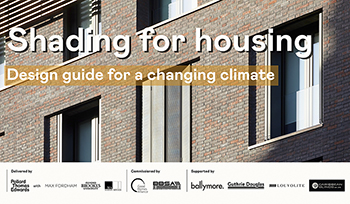
From the Good Homes Alliance and British Blind and Shutter Association.
UK Standard Skills Classification (SSC)

A shared framework for describing skills needs.
Social media ban consultation comes to close

CIOB urges UK Government to consider social media’s role in careers guidance in ban debate.
The latest of eight Skills England apprenticeship units

The addition of battery manufacturing welcomed by ECA with a warning about the risks of fast-tracked apprenticeship units.
Building Control Independent Panel final report
A precis of a key report led by Dame Hackitt with full recommendations and link to the government response.
Building Safety recap April, 2026
A short and longer run-through of the month, with links to further information and sources.
CIAT May 2026 briefing.
From medieval scribes to modern word art.

ECA welcomes crackdown on late payment and push for clean energy, whilst CIOB seek fixed cladding removal timeframes.
Cyber Security in the Built Environment
Protecting projects, data, and digital assets: A CIOB Academy TIS.
Managing competence in the built environment
ITFG publishes new industry guide on how to meet the ICC principles.
The UK's campaign to reduce noise pollution: Mythbusting, articles and topic guides.
Comments
ISO 19650 workflow?