





Standard form of contract
Contents |
[edit] General and consumer contracts
Standard Form Contracts are agreements that employ standardised, non-negotiated provisions, usually in pre-printed forms. These are sometimes referred to as 'boilerplate contracts', 'contracts of adhesion', or 'take it or leave it' contracts.
The terms may be drafted (or selected) by or on behalf of one party to the transaction – generally the party with superior bargaining power who routinely engages in such transactions. With few exceptions, the terms are not negotiable by the other party.
Standard form, business-to-consumer contracts fulfil an important efficiency role in the mass distribution of goods and services. These contracts have the potential to reduce transaction costs by eliminating the need to negotiate the many details of a contract for each instance a product is sold or a service is used. However, these contracts also have the ability to trick or abuse consumers because of the unequal bargaining power between the parties.
For example, where a standard form contract is entered into between an ordinary consumer and the salesperson of a multinational corporation, the consumer typically is in no position to negotiate the standard terms; indeed, the company’s representative often does not have the authority to alter the terms, even if either side to the transaction were capable of understanding all the terms in the fine print. These contracts are typically drafted by corporate lawyers far away from where the underlying consumer and vendor transaction takes place.
The danger of accepting unreasonable terms is greatest where drafters of such contracts present consumers with attractive terms on the visible or 'shopped terms of most interest to consumers, such as price and quality, but include one-sided terms benefiting the seller into the less visible, fine print clauses least likely to be read or understood by consumers.
In many cases, the consumer may not even see these contracts until the transaction has occurred. In some cases, the seller knows and takes advantage of the knowledge that consumers will not read or make decisions on these terms.
[edit] Construction contracts
In the construction industry, there are a number of standard contracts, subcontracts, warranties and appointment agreements published by organisations such as the Joint Contracts Tribunal (JCT), the Royal Institute of British Architects (RIBA), the Institution of Civil Engineers (ICE), and so on. Such agreements can be useful as they have a track record of being used between parties, and their precise meaning has been tested by case law.
English law does not require a particular form to contracts, and so the terms and ultimately the risk allocation is the choice of the parties involved. Standard Form Contracts (SFC) aim to minimise the time and cost of negotiating contracts.
Purpose-written, or bespoke contracts are often considered inadvisable because of the risk they may not adequately or fairly make provision for all circumstances, and that they are not supported by a history of case law. Their continued use however is a reflection of how inflexible some parts of the industry perceive standard forms of contract to be.
Amendment of standard contracts should be approached with reluctance and caution as they can disrupt the balance of risk and impact on the true purpose. See Modifying clauses in standard forms of construction contract for more information.
NB: The Housing Grants, Construction and Regeneration Act applies to all contracts for 'construction operations' (including construction contracts and consultants’ appointments). The Act sets out requirements relating to payment and adjudication. The Scheme for Construction Contracts (England and Wales) Regulations (also known as The Scheme for Construction Contracts) is a scheme which applies when construction contracts do not comply with the Housing Grants, Construction and Regeneration Act. The Scheme either supplements the provisions of the contract where it has deficiencies relative to the requirements of the Housing Grants, Construction and Regeneration Act, or replaces the contract where it is non-compliant.
[edit] Related articles on Designing Buildings
- Addendum.
- Bespoke construction contract.
- Clause.
- Construction contract.
- Housing Grants Construction and Regeneration Act.
- Procurement route.
- Scheme for Construction Contracts.
- Main contract.
- Modifying clauses in standard forms of construction contract.
- Non-performance.
- Notifications during construction works
- Traditional contract - pros and cons.
[edit] External references
Featured articles and news
Costs and insolvencies mount for SMEs, despite growth

Construction sector under insolvency and wage bill pressure in part linked to National Insurance, says report.
The place for vitrified clay pipes in modern infrastructure
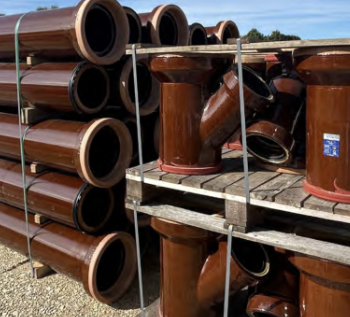
Why vitrified clay pipes are reclaiming their role in built projects.

Research by construction PR consultancy LMC published.
Roles and responsibilities of domestic clients

ACA Safety in Construction guide for domestic clients.
Fire door compliance in UK commercial buildings

Architect and manufacturer gives their low down.
Plumbing and heating for sustainability in new properties

Technical Engineer runs through changes in regulations, innovations in materials, and product systems.
Awareness of the Carbon Border Adjustment Mechanism
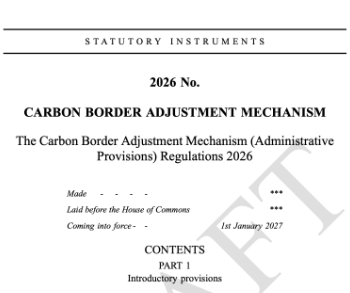
What CBAM is and what to do about it.
The new towns and strategic environmental assessments

12 locations of the New Towns Taskforce reduced to 7 within the new towns draft programme and open consultation.

Buildings that changed the future of architecture. Book review.
The Sustainability Pathfinder© Handbook
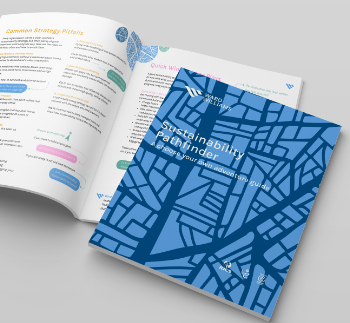
Built environment agency launches free Pathfinder© tool to help businesses progress sustainability strategies.
Government outcome to the late payment consultation, ECA reacts.
IHBC 2025 Gus Astley Student Award winners

Work on the role of hewing in UK historic conservation a win for Jack Parker of Oxford Brookes University.
Future Homes Building Standards and plug-in solar
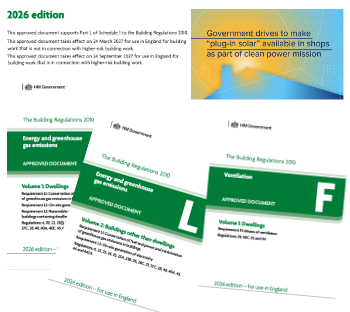
Parts F and L amendments, the availability of solar panels and industry responses.
How later living housing can help solve the housing crisis

Unlocking homes, unlocking lives.
Preparing safety case reports for HRBs under the BSA
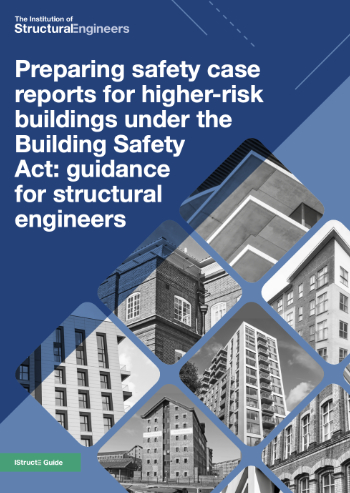
A new practical guide to preparing structural inputs for safety cases and safety case reports published by IStructE.
Male construction workers and prostate cancer

CIOB and Prostate Cancer UK encourage awareness of prostate cancer risks, and what to do about it.