





ICE Conditions of Contract
The ICE Conditions of Contract (CoC) were published by Thomas Telford on behalf of the Institution of Civil Engineers (ICE), the Association of Consulting Engineers (ACE) and the Civil Engineering Contractors Association (CECA). The first edition was published in 1945 and the seventh and final edition was published in 2001. During this time it was the dominant form of contract for civil engineering.
The key characteristics of the contract were:
- Valuation by measurement.
- Engineering responsibility for design.
- Engineer as the impartial certifier and valuer.
- Engineer's decision as the first stage of dispute resolution.
When the seventh edition was being prepared, pressure started to build for ICE to withdraw its support for CoC in favour of NEC.
NEC was first published in 1993 as the New Engineering Contract. It is a suite of construction contracts intended to promote partnering and collaboration between the contractor and client. It was developed as a reaction to more traditional forms of construction contract which were seen by some as adversarial. The third edition, NEC3 was published in 2005. NEC is a division of Thomas Telford, the commercial arm of ICE.
In 2001, at the launch of the seventh edition of CoC, Author, Brian Eggleston wrote ‘ One strongly expressed view was that with the Institution's New Engineering Contract (now called NEC Engineering and Construction Contract) steadily gaining ground and recognition there was no point in continuing the publication of traditional ICE Conditions…. My own view is that not only is there room for both sets of conditions in the industry but there is need for both. It is a matter of horses for courses as to which type of contract is best for any particular project. The New Engineering Contract requires project management skills, high staffing levels and a prominent place on office desks. Traditional ICE contracts have been satisfactorily run for decades and in thousands by civil engineers practising their ordinarily professional skills, frequently with mud on their boots and with the Conditions rarely on the office desk. The strength of the Conditions is in their consistency and continuity and by any standards they must be regarded as one of the most successful standard forms ever published.”
Despite this, with the growing popularity of NEC, in 2009 the ICE Council formally endorsed the NEC contracts and ICE transferred its part in the ownership of CoC to ACE and CECA. ICE, ACE and CECA continue to hold reference copies of the last published version of the ICE Conditions of Contract, but no longer support it or offer it for sale.
In August 2011, ACE and CECA relaunched CoC as the Infrastructure Conditions of Contract (ICC) a standard suite of forms of contract largely based on CoC.
[edit] Related articles on Designing Buildings Wiki
- Atkins v Secretary of State for Transport.
- Collaborative practices.
- Construction contract.
- Contract conditions.
- FIDIC.
- Infrastructure conditions of contract.
- Institution of Civil Engineers.
- JCT.
- Latham Report
- NEC contract change management systems.
- NEC contracts - road development and management schemes.
- NEC early contractor involvement.
- NEC3
- Procurement route.
Featured articles and news
Costs and insolvencies mount for SMEs, despite growth

Construction sector under insolvency and wage bill pressure in part linked to National Insurance, says report.
The place for vitrified clay pipes in modern infrastructure
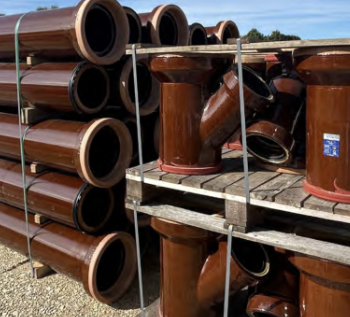
Why vitrified clay pipes are reclaiming their role in built projects.

Research by construction PR consultancy LMC published.
Roles and responsibilities of domestic clients

ACA Safety in Construction guide for domestic clients.
Fire door compliance in UK commercial buildings

Architect and manufacturer gives their low down.
Plumbing and heating for sustainability in new properties

Technical Engineer runs through changes in regulations, innovations in materials, and product systems.
Awareness of the Carbon Border Adjustment Mechanism
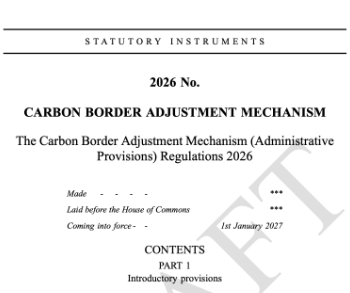
What CBAM is and what to do about it.
The new towns and strategic environmental assessments

12 locations of the New Towns Taskforce reduced to 7 within the new towns draft programme and open consultation.

Buildings that changed the future of architecture. Book review.
The Sustainability Pathfinder© Handbook
Built environment agency launches free Pathfinder© tool to help businesses progress sustainability strategies.
Government outcome to the late payment consultation, ECA reacts.
IHBC 2025 Gus Astley Student Award winners
Work on the role of hewing in UK historic conservation a win for Jack Parker of Oxford Brookes University.
Future Homes Building Standards and plug-in solar
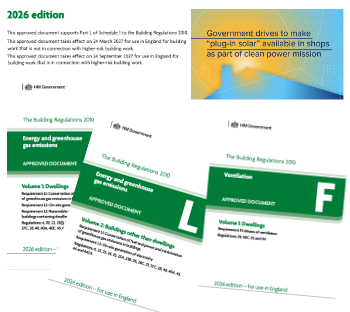
Parts F and L amendments, the availability of solar panels and industry responses.
How later living housing can help solve the housing crisis

Unlocking homes, unlocking lives.
Preparing safety case reports for HRBs under the BSA
A new practical guide to preparing structural inputs for safety cases and safety case reports published by IStructE.
Male construction workers and prostate cancer

CIOB and Prostate Cancer UK encourage awareness of prostate cancer risks, and what to do about it.