





Pylon
|
View of the pylon of the Temple of Isis at Philae shows the doorway decorated with carved hieroglyphs and relief scenes. The towers feature large, sunken reliefs of the Egyptian goddess Isis. |

Contents |
[edit] Introduction
The Penguin Dictionary of Architecture (third edition) was published in 1980. It was created for Penguin Reference and compiled by John Fleming, Hugh Honour and Nikolaus Pevsner.
It loosely defines a pylon as: “any high, isolated structure used decoratively or to mark a boundary. However, a freestanding arch or gateway of similar form is called a propylon.”
The word comes from the Greek term for gate or gateway.
[edit] History
The Penguin Dictionary of Architecture explains, “In ancient Egyptian architecture, pylons are the rectangular, truncated, pyramidal towers facing the gateway of a temple.”
The ancient Egyptians constructed large, stone pylons (sometimes referred to as obelisks) next to the entrances of tombs within the inner sanctuary of a temple. These pylons (or pylon temples) might be plain or could be covered in paintings, banners, carvings or other forms of decoration.
External facing pylons on gateways would depict images that showed respect for the authority of the king or queen, while interior pylons might illustrate the significance of the person (or people) placed within the tomb. Some pylons incorporated stairways and rooms.
[edit] A pylon renaissance
Architectural pylons became a popular feature during the 18th, 19th and 20th centuries. They were sometimes incorporated into Egyptian Revival, Neoclassical and Beaux-Arts architecture. Along with places of worship, stately homes and other noteworthy buildings constructed during these periods, pylons were incorporated into a range of structures including:

|
[edit] Pont Alexandre III (France)
Built in 1900, the Paris bridge incorporates highly decorative pylons in the form of quadrangle pillars.
|
These grade II listed obelisks are called The Pylons. They were erected at the boundary when the County Borough was extended. |

[edit] Patcham Pylon (Great Britain)
Built in 1928, these massive pylons form an entrance gateway for drivers who travel on the A23 road between London and Brighton and Hove.

|
[edit] Sydney Harbour Bridge (Australia)
Opened in 1932, the bridge has granite faced concrete pylons standing at each end of the arch.
[edit] Other types of pylons
In addition to its architectural associations, the term pylon has other definitions:
[edit] Support pylon
In modern construction, towers that provide support may be referred to as pylons, whether they are isolated or used in conjunction with other structures. This type of tower can come in the form columns used to hang beams used for certain types of structural work.
[edit] Wooden pylon
These are typically structures used in or around water as a type of 'bumper' to redirect water traffic.
[edit] Traffic pylon
Also referred to as a highway cone, safety cone, construction cone, witches’ hat or traffic cone traffic pylons are sometimes used temporarily to indicate a path, road or area that should be avoided. They can be used as a traffic calming device to redirect vehicles or can be part of road management measures in conjunction with signage and pavement markings. They can also be used as a safety measure around construction sites.
[edit] Electricity pylon
This is a tall, lattice-like structure (usually made of steel) which is used to support overhead power lines. Also known as a transmission tower. Ref The HS2 London-West Midlands Environmental Statement, published by the Department for Transport in November 2013.

|
There is some controversy around the use of the term, electricity pylon. In the Manchester Science + Industry Museum article entitled, “When is a pylon not a pylon?”, Dan Wilson wrote, “When I joined Electricity North West, one of the first things I learned was that what I’d thought of as ‘pylons’ are actually referred to in the industry as ‘towers’, or to use the full name, steel lattice towers. Calling them pylons in our line of work is a major faux pas! So why do we not call them pylons like everyone else? Well, within engineering, the term ‘pylon’ tends to refer to a solid structure that suspends something from another structure. The steel tower is the entire structure, and arguably the pylon would be the part of the structure that the insulators and lines are suspended from."
[edit]
The word pylon is also commonly used in athletics (in American football, the markers used to identify a specific part of the field are sometimes referred to as pylons) as well as aircraft assembly (the pylon is a suspension device that connects the engine to the aircraft frame).
[edit] Related articles on Designing Buildings
- Clifton Suspension Bridge.
- Electricity pylon.
- Going the extra mile to extend the lifespan of the Menai Suspension Bridge.
- Great Pyramid of Giza.
- Quadrangle.
- Road traffic management.
- Tower.
- Traffic calming.
- Ziggurat.
[edit] External resources
- Dan Wilson, Manchester Science + Industry Museum, “When is a pylon not a pylon?”
Featured articles
Check out some of the best features and news from Designing Buildings as well as key stories from around the web.
Mayors are to be given planning call in powers

Mayors across England will be able to make the most important planning decisions.

The Master Builder: William Butterfield and his times. Book review.

Why construction can't afford to ignore the skills gap.
Building Safety Regulator, 19 August

Gill Kernick appointed Independent Chair of Residents’ Panel.
Connecting knowledge, technology and conservation
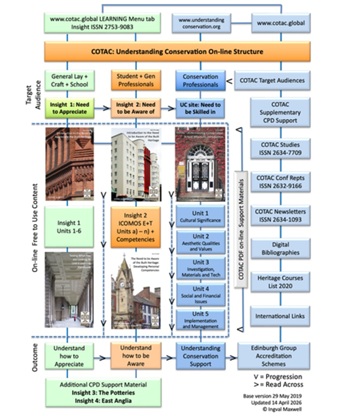
Building competence for the future of built heritage.
Building Regulations and Building Safety Act

CIOB publishes free advice for non-domestic clients.

Building Safety Newsletter from MHCLG.
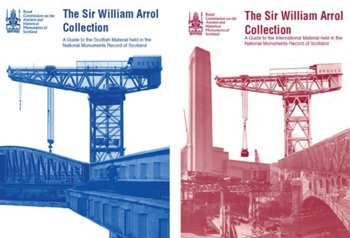
An extraordinary record of steel engineering worldwide.

Households living near new pylons to save on bills.

ECA warns growth must not outpace grid capacity or skills.
The role of the client and decision making

CIOB response to built environment professions call for evidence.
Construction's sustainability reporting revolution
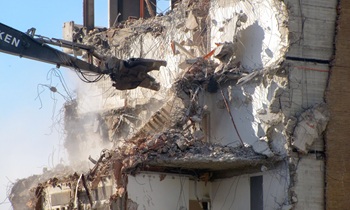
Tracking upfront embodied carbon with digital tools.