





Dry stone walling

Contents |
[edit] What is dry stone walling?
Dry stone walling is a masonry technique using only stones, and without a mortar to bind the stones. The stones are carefully cut and stacked according to shapes and sizes, normally with shorter edges to the outside to tie the wall together so as to create a freestanding boundary wall, though it has also been use to create structures. In Scotland this term might be referred to as drystane and elsewhere also as drystack.
The Dry Stone Walling Association of Great Britain (DSWA) estimates that there are approximately 200,000 km of dry stone walls in the UK, many of which are in poor condition. The DSWA was established in 1968 as a registered charity working to advance education in the craft of drystone walling and maintain it as heritage for public benefit.
[edit] How is a dry stone wall built?
Dry stone walls are normally built with a taper wider at bottom (called a batter), with the largest footing stones laid in pairs at the base. These are built upon with facing stones, the longer edge of which are laid into the depth of the wall, tied with smaller pinning stones and heartings which fill the gaps. Around halfway up the wall large and long through stones, are placed intermittently, these cross the depth of the wall from face to face and help tie the two rows of face stones together. The stones beneath the through stones are known as the first lift and those above, the second lift, if a second set of through stones are laid, then above that would be the third lift, if not then than wall is finished with a cope or series of coping stones.
[edit] What is the key tool needed for a dry stone wall?
The main tool needed for dry stone walling is the waller's hammer, also called a trimming hammer, walling hammer or stone hammer. It is relatively heavy in weight about 3-4 pounds, has one tapered edge for chipping stones and a square for setting stones in place. Other tools used are lines and levels to help set out walls to ensure they are laid level. Walls tend to be over half a meter thick, often more and most are built as boundary wall, using naturally form stones, though modern stone wall may also used squared and prepared stones.
[edit] Are any buildings made with dry stone walls?
Some traditional vernacular buildings are built with dry stone walls as well as some elements of early castle fortifications in the UK aswell as a cross Europe. In the UK possibly the best known full dwelling built using this method is the Scottish Blackhouse (taigh-dubh in Gaelic). The earliest blackhouses were constructed as much as 5,000 years ago, with the most recent ones built in the Hebrides in the 1800's, some still inhabited by crofting families and their animals, right up to the mid 1900's. The drystone walls were roofed using timber rafters, which were then covered in turf and thatch, in some cases turf sods were also used within the walls as fill.
[edit] What other examples are there of dry stone constructions?
Stacks of stones, laid without mortar are also found across the globe, constructed as markers, landmarks, spiritual and ritual places of significance. Many Cairns can be found across Scotland, the word comes from Scottish Gaelic and describes a tower of balanced stones constructed to mark a significant site, often a burial ground. One of the largest in the UK is Maeve's Cairn on Knocknarea in Ireland. Other well known dry stone constructions related to spiritual and ritual activities are found in Machu Picchu, Peru, whilst not considered dry stoning, as such Stonehenge in the UK is comprised of huge stones balanced to mark a place of significance.
[edit] Related articles on Designing Buildings
- Building with structural stone.
- Choosing stone.
- Caithness Broch Project.
- Conservation in the Highlands and Islands.
- Development of sustainable rural housing in the Scottish Highlands and Islands.
- Engaging communities in our Highlands and Islands.
- Finding stone to conserve historic buildings.
- IHBC articles.
- Lord Leverhulme on Lewis and Harris.
- Orkney gables.
- Macallan Distillery.
- Masonry.
- Modern Stonemasonry.
- Matthew Davidson stonemason and civil engineer.
- New architecture of Scotland’s west coast.
- Re-thatching a Hebridean blackhouse.
- Thatch.
- The architecture of the Isle of Man.
- The challenges and opportunities of conservation in the Highlands and Islands.
- The Dry Stone Walling Association of Great Britain DSWA
- The Institute of Historic Building Conservation.
- The Scots reed thatching tradition.
- Traditional construction materials on the Isle of Man.
- Traditional straw thatching in times of shortage.
- Types of stone.
- Vernacular architecture.
Featured articles and news
Costs and insolvencies mount for SMEs, despite growth

Construction sector under insolvency and wage bill pressure in part linked to National Insurance, says report.
The place for vitrified clay pipes in modern infrastructure
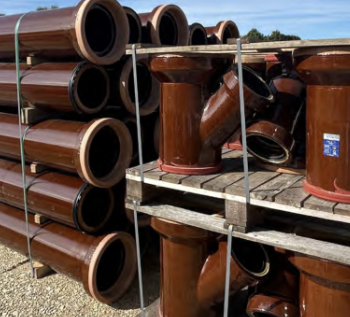
Why vitrified clay pipes are reclaiming their role in built projects.

Research by construction PR consultancy LMC published.
Roles and responsibilities of domestic clients
ACA Safety in Construction guide for domestic clients.
Fire door compliance in UK commercial buildings

Architect and manufacturer gives their low down.
Plumbing and heating for sustainability in new properties

Technical Engineer runs through changes in regulations, innovations in materials, and product systems.
Awareness of the Carbon Border Adjustment Mechanism
What CBAM is and what to do about it.
The new towns and strategic environmental assessments
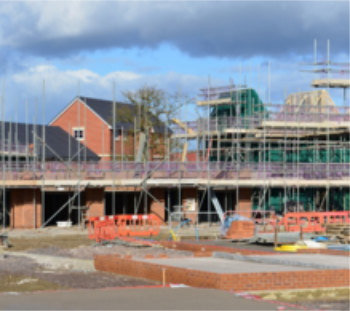
12 locations of the New Towns Taskforce reduced to 7 within the new towns draft programme and open consultation.
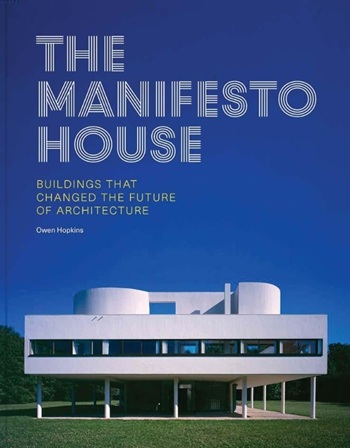
Buildings that changed the future of architecture. Book review.
The Sustainability Pathfinder© Handbook
Built environment agency launches free Pathfinder© tool to help businesses progress sustainability strategies.

Government outcome to the late payment consultation, ECA reacts.
IHBC 2025 Gus Astley Student Award winners

Work on the role of hewing in UK historic conservation a win for Jack Parker of Oxford Brookes University.
Future Homes Building Standards and plug-in solar
Parts F and L amendments, the availability of solar panels and industry responses.
How later living housing can help solve the housing crisis
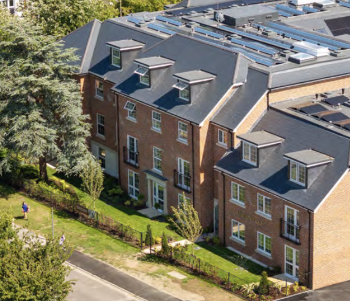
Unlocking homes, unlocking lives.
Preparing safety case reports for HRBs under the BSA
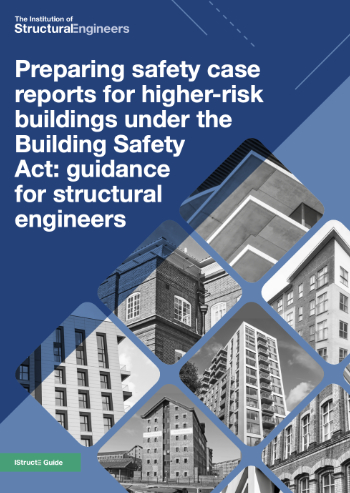
A new practical guide to preparing structural inputs for safety cases and safety case reports published by IStructE.
Male construction workers and prostate cancer

CIOB and Prostate Cancer UK encourage awareness of prostate cancer risks, and what to do about it.