





Briefing documents for building design
Contents |
[edit] Introduction
Briefing documents are crucial to the success of a project as they describe the requirements for which the design provides the solution. However, the huge variety of names given to briefing documents inevitably leads to confusion, particularly where members of a project team are working together for the first time.
Broadly on Designing Buildings Wiki we have followed the Office of Government Commerce (OGC) naming system for briefing documents, but have added a 'statement of need' that describes the client's possible requirements in the very early stages, before it has been decided that a project is merited.
Whilst the OGC has now been absorbed into the Efficiency and Reform Group within the Cabinet Office and its documentation archived, its procedures are still referred to in the Government Construction Strategy, and the OGC gateway review process remains the only detailed description of the path followed by public projects.
For clarity, and by way of justifying our approach, we set out below the range of terms we use and their equivalents in the OGC or RIBA systems.
NB: Whilst generally, briefing documents will evolve over the life of a project and will require specialist input from consultants, an experienced client may be able to prepare a detailed brief in the very early stages that does not require a great deal of further development (for example a retailer who regularly opens new stores). An inexperienced client however may benefit from input by independent client advisers to prepare a strategic brief, and this may then be developed with the help of the consultant team.
[edit] Statement of need
This is the client's very first attempt to describe their possible requirements, before it has been decided that a project is merited or what form such a project might take. There is no equivalent document in the RIBA plan of work or the OGC gateway procedure.
For more information, see Statement of need.
[edit] Strategic brief
The strategic brief is written by the client and provides sufficient information about the project to allow the appointment of a consultant team (or independent client advisers in the public sector).
The strategic brief is then developed by the client with the benefit of feedback from the consultant team (or independent client advisers). It will then describe the client's requirements in sufficient detail for feasibility studies and option appraisals to be carried out.
Both OGC guidance and the 2013 RIBA plan of work now also call this document the strategic brief. Although, the RIBA also call it the 'initial strategic brief' (RIBA Plan of Work, pre 2013), 'initial brief' (RIBA Plan of Work, pre 2013), 'initial statement of project objectives' (RIBA Standard Form of Agreement 2010), 'statement of need' (Architect's Job Book) and 'design brief' (Architect's Job Book).
For more information, see Strategic brief.
[edit] Project brief
The project brief is a development of the strategic brief.
The project brief is the key document upon which the design will be based. It evolves through the project brief stage and the concept design stage (see the Designing Buildings Wiki free work plans) with the benefit of information gained from consultations with the client and other stakeholders and ongoing design development. It is frozen at the end of the concept design stage and any further changes are then subject to change control procedures.
In the private sector it will be developed by the consultant team, whereas in the public sector it is developed by the client in full prior to the appointment of the integrated supply team. This may require input by independent client advisers.
OGC guidance also describes this as the project brief. It suggests it is a formal statement of the objectives and functional and operational requirements of the finished project. It should be prepared in sufficient detail to enable the integrated project team to execute the specification and detailed design of the work and is therefore an essential reference for the team.
It is a key component of the project execution plan and is developed at tender into an output-based specification (the description of requirements upon which integrated supply teams will tender). The output-based specification focuses on the desired outputs in business terms, rather than a detailed technical specification of how the service is to be provided; this allows providers to propose innovative solutions that might not have occurred to the client.
The RIBA plan of work now calls this document the 'initial project brief' then 'final project brief', although pre-2013, they referred to it as the 'design brief' (RIBA Plan of Work), the 'project brief' (also the RIBA Plan of Work) and the 'final written brief' (RIBA Standard Form of Agreement 2010 'other services').
For more information, see Project brief.
[edit] Related articles on Designing Buildings
Featured articles and news
Costs and insolvencies mount for SMEs, despite growth

Construction sector under insolvency and wage bill pressure in part linked to National Insurance, says report.
The place for vitrified clay pipes in modern infrastructure

Why vitrified clay pipes are reclaiming their role in built projects.

Research by construction PR consultancy LMC published.
Roles and responsibilities of domestic clients
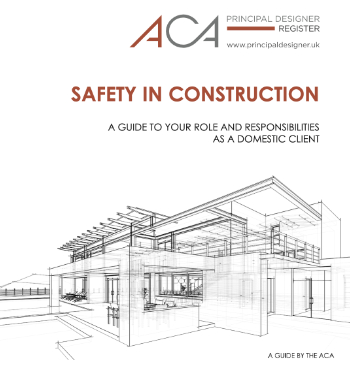
ACA Safety in Construction guide for domestic clients.
Fire door compliance in UK commercial buildings

Architect and manufacturer gives their low down.
Plumbing and heating for sustainability in new properties

Technical Engineer runs through changes in regulations, innovations in materials, and product systems.
Awareness of the Carbon Border Adjustment Mechanism
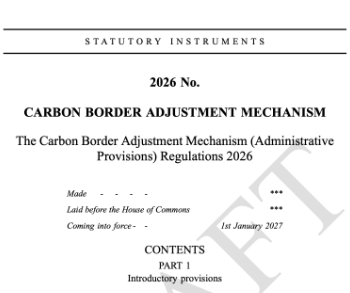
What CBAM is and what to do about it.
The new towns and strategic environmental assessments
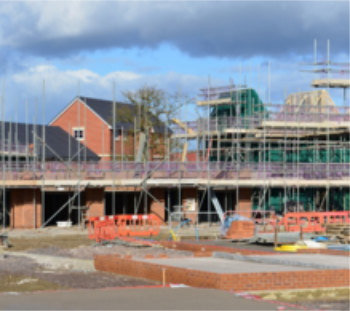
12 locations of the New Towns Taskforce reduced to 7 within the new towns draft programme and open consultation.
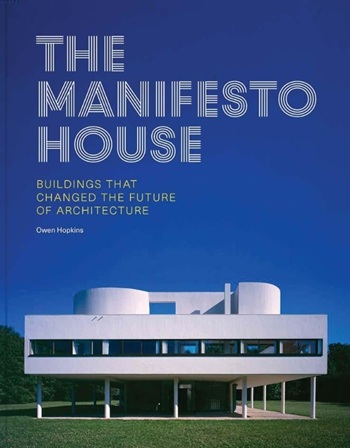
Buildings that changed the future of architecture. Book review.
The Sustainability Pathfinder© Handbook
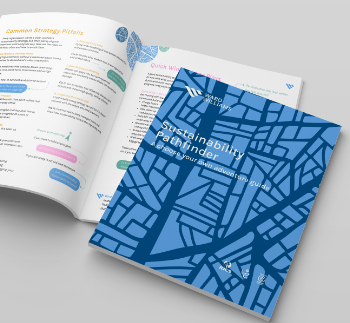
Built environment agency launches free Pathfinder© tool to help businesses progress sustainability strategies.

Government outcome to the late payment consultation, ECA reacts.
IHBC 2025 Gus Astley Student Award winners
Work on the role of hewing in UK historic conservation a win for Jack Parker of Oxford Brookes University.
Future Homes Building Standards and plug-in solar
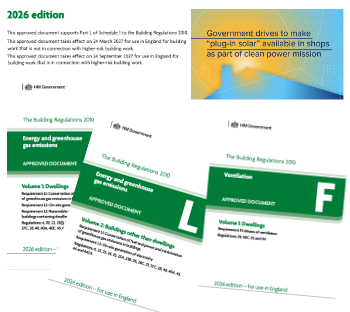
Parts F and L amendments, the availability of solar panels and industry responses.
How later living housing can help solve the housing crisis

Unlocking homes, unlocking lives.
Preparing safety case reports for HRBs under the BSA
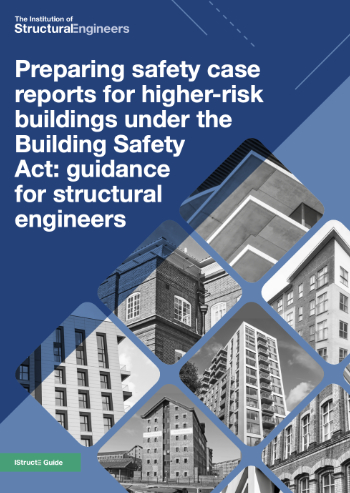
A new practical guide to preparing structural inputs for safety cases and safety case reports published by IStructE.
Male construction workers and prostate cancer

CIOB and Prostate Cancer UK encourage awareness of prostate cancer risks, and what to do about it.
Comments
To start a discussion about this article, click 'Add a comment' above and add your thoughts to this discussion page.