





Weak controls and oversight blamed for faulty home installations under energy efficiency scheme
98% of homes with external wall insulation installed under the government’s ECO scheme require work to correct major issues that will cause problems such as damp and mould.
DESNZ’s consumer protection system, which was set up in 2021, did not alert it to significant issues with the quality of installations until late 2024.
The NAO recommends that DESNZ sets out how and when affected households can have faulty installations repaired, and reforms the consumer protection system.
A new National Audit Office (NAO) report sets out the reasons for failures in the government’s energy efficiency scheme for homes, including poor-quality installations, weak government oversight and inadequate audit and monitoring, which the Department for Energy Security and Net Zero (DESNZ) believes have led to tens of thousands of households needing repair work to correct major issues that will cause problems such as damp and mould.1
The government’s Energy Company Obligation (ECO) scheme aims to tackle fuel poverty and reduce carbon emissions in Great Britain by requiring energy companies to fund the installation of energy efficiency measures, such as insulation, in homes.2
But poor installation work has resulted in an estimated 22,000 to 23,000 homes with external wall insulation fitted under the scheme (98% of the total) and 9,000 to 13,000 homes with internal insulation (29% of the total) having major issues that need fixing. A small percentage of these installations also pose immediate health and safety risks.3
Possible explanations why so many installations have been carried out to such a poor standard include an under-skilled workforce, with work being subcontracted to individuals and firms who are not competent or certified; uncertainty over which standards apply to which jobs; and businesses ‘cutting corners’ when undertaking design and installation work.
DESNZ implemented a new consumer protection system for the scheme in 2021, which included appointing TrustMark as its government-endorsed quality scheme.4 But this system failed to alert DESNZ to significant issues with the quality of installations until October 2024, by which time the media had already reported on individual cases of bad mould in homes.
Reasons for the ECO scheme’s shortcomings include:
- weak government oversight resulting in widespread issues with the ECO scheme not being identified sooner;
- an overly complex consumer protection system that ultimately failed due to unclear and fragmented roles, responsibilities and accountabilities among DESNZ, Ofgem and private sector certification bodies and scheme providers;5
- TrustMark’s funding arrangements limiting its ability to have analytical systems fully up and running until the latter half of 2024; and
- insufficient audit and monitoring, in part due to weaknesses that allowed installers to ‘game’ the system.
In addition to these issues, in November 2024 Ofgem estimated that businesses had falsified claims for ECO installations in between 5,600 and 16,500 homes, potentially claiming between £56 million and £165 million from the energy suppliers operating under the scheme.7
DESNZ and Ofgem took action once TrustMark made them aware of the extent of the problems. This included asking certification bodies and scheme providers to suspend the worst performing installers; communicating the issues to potentially affected households and to the wider public; and implementing immediate changes to the consumer protection system.
DESNZ also plans to apply the lessons learned from this experience to the design of its future schemes and its forthcoming Warm Homes Plan.
To improve the consumer protection system, and to boost householders’ confidence in government-backed schemes,8 the NAO recommends that DESNZ:
- takes clear responsibility for schemes such as ECO, even when they are funded through consumers’ electricity bills;
- clarifies its approach to repairing faulty ECO scheme installations alongside its Warm Homes Plan;
- reforms the consumer protection system for retrofit schemes; and
- reports annually on a statistically robust estimate of the level of fraud and non-compliance in each of its retrofit schemes.
“ECO and other such schemes are important to help reduce fuel poverty and meet the government’s ambitions for energy efficiency.
“But clear failures in the design and set-up of ECO and in the consumer protection system have led to poor-quality installations, as well as suspected fraud.
“DESNZ must now ensure that businesses meet their obligations to repair all affected homes as quickly as possible. It must also reform the system so that this cannot happen again.”
Gareth Davies, head of the NAO
This article was issued via an NAO press release as "Weak controls and oversight blamed for faulty home installations under energy efficiency scheme" dated 14 October, 2025.
[edit] Related articles on Designing Buildings
- BR 135 Fire Performance of external thermal insulation for walls of multi-storey buildings.
- Cavity wall insulation.
- External wall insulation.
- Floor insulation.
- Insulation envelope.
- Insulation for ground floors.
- PA ratio for insulation.
- Reducing thermal bridging at junctions when designing and installing solid wall insulation FB 61.
- Retrofit measures under ECO4 and GBIS.
- Roof insulation.
- Solid wall insulation.
- Specifying insulation for inverted roofs.
- Thermal insulation for buildings.
- The Great British Insulation Scheme GBIS
- Types of insulation.
- Understanding Insulation and the Part It Plays in Building Regulations.
- Wall insulation and moisture risk.
- Wood and insulation.
Featured articles and news
Costs and insolvencies mount for SMEs, despite growth
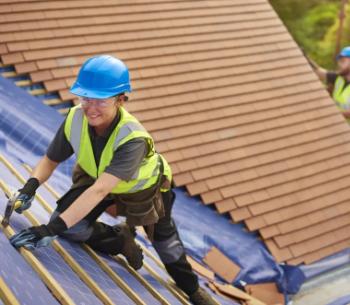
Construction sector under insolvency and wage bill pressure in part linked to National Insurance, says report.
The place for vitrified clay pipes in modern infrastructure
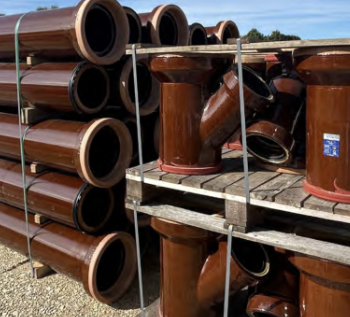
Why vitrified clay pipes are reclaiming their role in built projects.

Research by construction PR consultancy LMC published.
Roles and responsibilities of domestic clients

ACA Safety in Construction guide for domestic clients.
Fire door compliance in UK commercial buildings

Architect and manufacturer gives their low down.
Plumbing and heating for sustainability in new properties
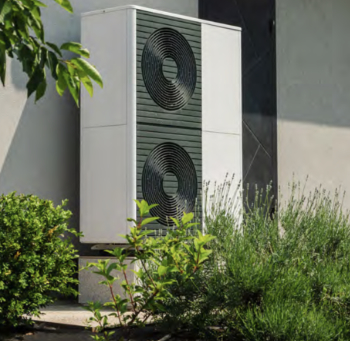
Technical Engineer runs through changes in regulations, innovations in materials, and product systems.
Awareness of the Carbon Border Adjustment Mechanism
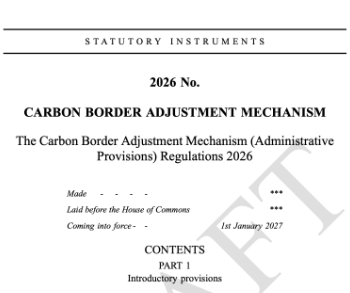
What CBAM is and what to do about it.
The new towns and strategic environmental assessments

12 locations of the New Towns Taskforce reduced to 7 within the new towns draft programme and open consultation.

Buildings that changed the future of architecture. Book review.
The Sustainability Pathfinder© Handbook
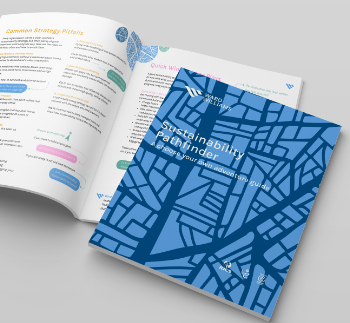
Built environment agency launches free Pathfinder© tool to help businesses progress sustainability strategies.
Government outcome to the late payment consultation, ECA reacts.
IHBC 2025 Gus Astley Student Award winners

Work on the role of hewing in UK historic conservation a win for Jack Parker of Oxford Brookes University.
Future Homes Building Standards and plug-in solar
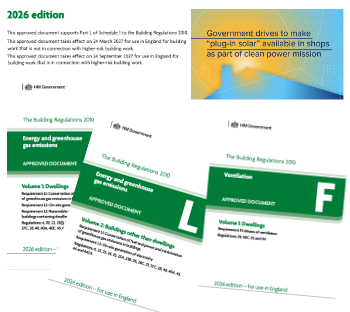
Parts F and L amendments, the availability of solar panels and industry responses.
How later living housing can help solve the housing crisis

Unlocking homes, unlocking lives.
Preparing safety case reports for HRBs under the BSA
A new practical guide to preparing structural inputs for safety cases and safety case reports published by IStructE.
Male construction workers and prostate cancer

CIOB and Prostate Cancer UK encourage awareness of prostate cancer risks, and what to do about it.