





Research in the construction industry

In general, research is the systematic and investigative means of undertaking work to expand and build upon knowledge in a particular field. Research can be carried out to establish, confirm or challenge facts and theories, to solve problems, support ideas, develop new theories, and so on.
Very broadly, there are two types of research strategies available: quantitative and qualitative.
Quantitative research is an objective measure of definable factual evidence such as numbers and statistics that are capable of being analysed to determine the validity of a hypothesis.
Quantitative research can be used deductively to test a theory that can be presented in one of two ways:
- A hypothetical statement such as ‘if X then Y’.
- An educated ‘guess’.
Data accumulated through the research process should help to prove or disprove the hypothesis.
Qualitative research is the more subjective analysis of descriptions, views, opinions, and alternative theories. Depending on the approach taken,qualitative research may use a smaller sample size than quantitative research, but the data obtained can be more personal and in-depth.
Broadly, the two categories of qualitative research are exploratory and attitudinal:
- Exploratory research is used primarily to gain a greater understanding of a particular subject. It is useful for diagnosing a situation, considering alternative ideas and discovering new ones. The most common method of exploratory research is interviewing. Another common method is a questionnaire (usually with open-ended questions).
- Attitudinal research is used to evaluate the opinions or views of individuals in a way that is subjective. Examples are questions that ask the individual to express their level of agreement with a statement, or to rank preferences.
Research generally follows a specific structural process (although it may vary according to the subject matter and researcher):
- Formation of the topic.
- Hypothesis (a testable prediction).
- Conceptual definition.
- Operational definition (how the variables will be measured and assessed).
- Data gathering.
- Data analysis.
- Data interpretation.
- Test and revision of hypothesis.
- Conclusion (and reiteration if necessary).
In terms of the construction industry, there are a wide range of different organisations and bodies which specialise in conducting research; including the Building Research Establishment (BRE), Building Services Research and Information Association (BSRIA), National House Building Council (NHBC), the Construction Industry Research and Information Association (CIRIA), i3P, higher education institutes, the government and private companies.
However, the construction industry is frequently criticised for spending less on research than other comparable industries.
Research and development tax relief is a specialist tax relief made available by teh government. It is designed to provide support to companies who invest in research and development (R&D), to help bring new products to market, to develop new processes, or to improve existing products or processes. For more information, see Research and development tax relief.
In September 2020, HM Revenue & Customs reported that £175m was paid to UK construction firms in research and development tax credits in the previous year,a significant increase on the £90m paid the year before.
You can see a range of articles on Designing Buildings Wiki about research and innovation at: https://www.designingbuildings.co.uk/wiki/Category:Research_/_Innovation
[edit] Related articles on Designing Buildings Wiki
- Advanced construction technology.
- Case study.
- CIAT agrees to collaboration arrangement with CIB.
- C-K theory.
- Construction industry publishing.
- Construction innovation.
- Construction reports.
- Data.
- Development appraisal.
- Innovation in construction projects.
- Modern methods of construction.
- Qualitative research and the built environment.
- Quantitative v qualitative.
- Research and development tax relief.
- Review.
Featured articles and news
Costs and insolvencies mount for SMEs, despite growth

Construction sector under insolvency and wage bill pressure in part linked to National Insurance, says report.
The place for vitrified clay pipes in modern infrastructure
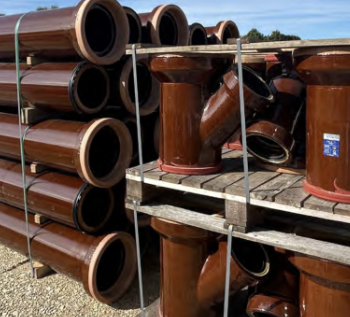
Why vitrified clay pipes are reclaiming their role in built projects.

Research by construction PR consultancy LMC published.
Roles and responsibilities of domestic clients

ACA Safety in Construction guide for domestic clients.
Fire door compliance in UK commercial buildings

Architect and manufacturer gives their low down.
Plumbing and heating for sustainability in new properties

Technical Engineer runs through changes in regulations, innovations in materials, and product systems.
Awareness of the Carbon Border Adjustment Mechanism
What CBAM is and what to do about it.
The new towns and strategic environmental assessments
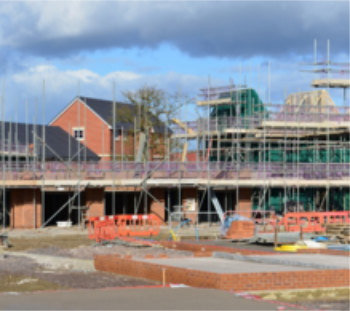
12 locations of the New Towns Taskforce reduced to 7 within the new towns draft programme and open consultation.

Buildings that changed the future of architecture. Book review.
The Sustainability Pathfinder© Handbook
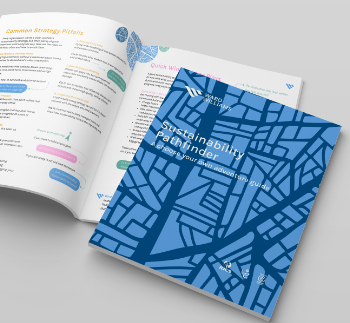
Built environment agency launches free Pathfinder© tool to help businesses progress sustainability strategies.

Government outcome to the late payment consultation, ECA reacts.
IHBC 2025 Gus Astley Student Award winners

Work on the role of hewing in UK historic conservation a win for Jack Parker of Oxford Brookes University.
Future Homes Building Standards and plug-in solar
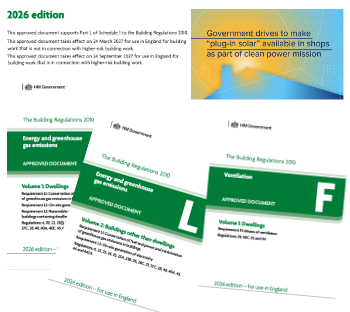
Parts F and L amendments, the availability of solar panels and industry responses.
How later living housing can help solve the housing crisis

Unlocking homes, unlocking lives.
Preparing safety case reports for HRBs under the BSA
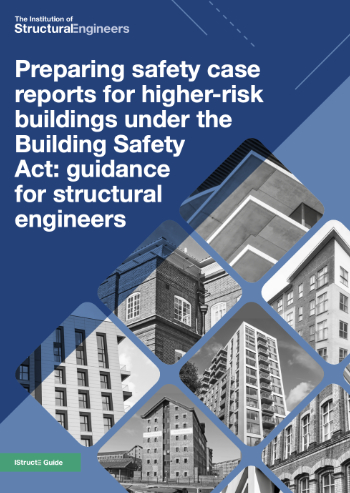
A new practical guide to preparing structural inputs for safety cases and safety case reports published by IStructE.
Male construction workers and prostate cancer

CIOB and Prostate Cancer UK encourage awareness of prostate cancer risks, and what to do about it.