





Building products
Products are processed, finished items that are offered for sale. That is, they are manufactured combinations of materials and perhaps other products, processed to create items such as doors, windows, light fittings, and so on.
They are generally distinguished from ‘materials’ which are raw, unprocessed substances such as sand, salt, and so on, and from ‘services’ which are activities such as consultation, maintenance, installation, or sometimes the provision of accommodation.
See Products v goods v materials for more information.
The Construction Products Regulation defines a ‘construction product’ as; ‘…any product or kit which is produced and placed on the market for incorporation in a permanent manner in construction works or parts thereof and the performance of which has an effect on the performance of the construction works with respect to the basic requirements for construction works.'
BSI Flex 8670 V3.0, Built environment – Core criteria for building safety in competence frameworks – Code of practice, April 2021 Version 3, published by The British Standards Institution in 2021, defines a construction product as a: ‘…product, substance or collection thereof that has been manufactured, refined or processed and declared by its manufacturer for an intended end use for temporary and/or permanent inclusion in building or civil engineering works, refurbishment or maintenance.’
The Code for Construction Product Information, Version 1.0, published by CCPI in September 2021 defines a construction product as “a product, substance or collection thereof, that has been manufactured, refined or processed and declared by its Manufacturer for an intended end use for temporary and/or permanent inclusion in a building or civil engineering works, whether as part of new construction, refurbishment or maintenance.”
Redefining value, The manufacturing revolution, Remanufacturing, refurbishment, repair and direct reuse in the circular economy, published by the United Nations Environment Programme in 2018, suggests that the word product: ‘Refers to an article, object or substance that is manufactured or refined for sale, that is the final output of a process.’
PAS 9980:2022, Fire risk appraisal of external wall construction and cladding of existing blocks of flats – Code of practice, published by BSI Standards Limited in 2022, defines a product as: ‘a item that is formed of one or more materials… For example, painted aluminium or timber, ACM and manufactured boards which have a complex internal structure or densities which differ across their thickness, are all non-homogenous products. For the purpose of reaction to fire testing, only the surface material (such as paints/coatings, the aluminium sheet of ACM where this is not painted, or the portion of a product that is essentially the same as what is exposed at the surface) is deemed to be the surface. Some products are homogenous.’
For a list of all Designing Buildings articles about building products, click here.
[edit] Related articles on Designing Buildings
- Articles about products and services.
- Building activities definition.
- Building complex.
- Building component.
- Building element.
- Building entities.
- Building spaces definition.
- Building system.
- By-product.
- Co-product.
- Constituent construction product.
- Construction Products Regulation.
- Intermediate product.
- Manufacturer.
- Product manufacturers must regain confidence.
- Products v goods v materials.
- Sundry items.
Featured articles and news
Level 6 Design, Construction and Management BSc

CIOB launches first-ever degree programme to develop the next generation of construction leaders.

Open for business as of April, with its 2026 prospectus and new pipeline of housing schemes.
The operational value of workforce health

Keeping projects moving. Incorporating unplanned absence and the importance of health, in operations.
A carbon case for indigenous slate
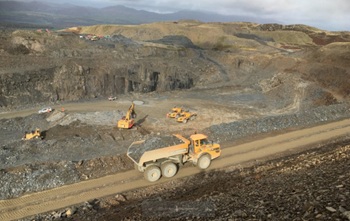
UK slate can offer clear embodied carbon advantages.
Costs and insolvencies mount for SMEs, despite growth

Construction sector under insolvency and wage bill pressure in part linked to National Insurance, says report.
The place for vitrified clay pipes in modern infrastructure
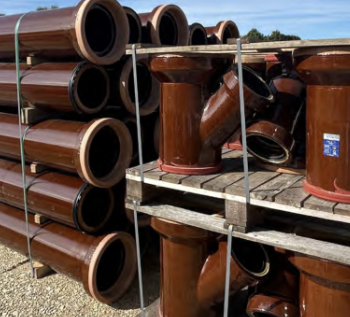
Why vitrified clay pipes are reclaiming their role in built projects.

Research by construction PR consultancy LMC published.
Roles and responsibilities of domestic clients

ACA Safety in Construction guide for domestic clients.
Fire door compliance in UK commercial buildings

Architect and manufacturer gives their low down.
Plumbing and heating for sustainability in new properties

Technical Engineer runs through changes in regulations, innovations in materials, and product systems.
Awareness of the Carbon Border Adjustment Mechanism
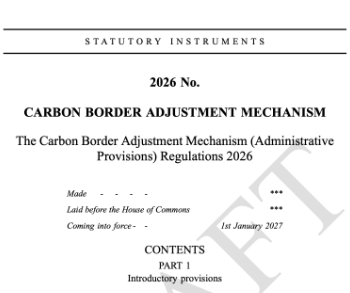
What CBAM is and what to do about it.
The new towns and strategic environmental assessments
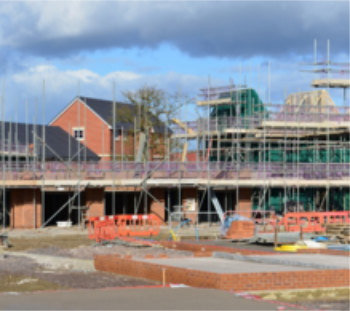
12 locations of the New Towns Taskforce reduced to 7 within the new towns draft programme and open consultation.
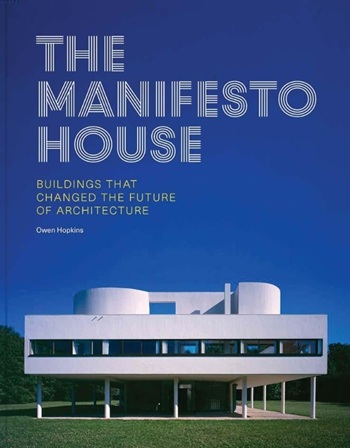
Buildings that changed the future of architecture. Book review.
The Sustainability Pathfinder© Handbook
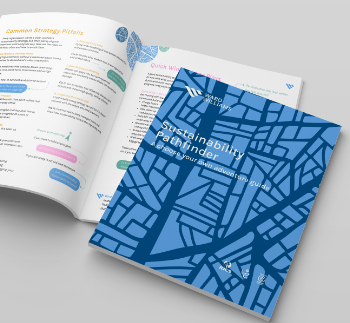
Built environment agency launches free Pathfinder© tool to help businesses progress sustainability strategies.

Government outcome to the late payment consultation, ECA reacts.
IHBC 2025 Gus Astley Student Award winners

Work on the role of hewing in UK historic conservation a win for Jack Parker of Oxford Brookes University.