





Solid and liquid contaminants site risk assessments
Contaminated land is land that presents a hazard in the form of material that has the potential for harm. Assessment of the risk of harm is based on the likelihood, frequency and seriousness of the adverse consequences of contaminants. See contaminated land for more information.
Where development sites are affected by solid or liquid contaminants, Approved document C, Site preparation and resistance to contaminants and moisture, suggests that the principles of risk assessment should follow the ‘source–pathway–receptor’ relationship, or 'pollutant linkage', where:
- ‘Sources’ are contaminants in or on the ground.
- ‘Receptors’ are the buildings, building materials, building services and people introduced onto the site.
- ‘Pathways’ are the pollutant linkages between sources and receptors which must be broken or conditioned so they do not pose a significant risk.
The approved document suggests that this can be achieved by:
- Treating the contaminant. The use of physical, chemical or biological processes to eliminate or reduce the contaminant’s toxicity or harmful properties.
- Blocking or removing the pathway. Isolating the contaminant beneath protective layers or installing barriers to prevent migration.
- Protecting or removing the receptor. Changing the form or layout of the development, using appropriately designed building materials.
- Removing the contaminant.
The assessment of risk should adopt a tiered approach. A preliminary risk assessment should be undertaken, and depending on the outcome, either a generic quantitative risk assessment (GQRA) or detailed quantitative risk assessment (DQRA), or both, may be necessary.
CLR 11 Model Procedures for the Management of Land Contamination, Defra/Environment Agency, 2004 suggests that the stages of risk assessment should be:
- Hazard identification (the preliminary site assessment). A desk study and site walkover to establish contaminant sources, pathways and receptors and to design exploratory and detailed ground investigations.
- Hazard assessment. Identify linkages and the potential for unacceptable risks and undertake exploratory site investigation.
- Risk estimation. Assess the degree of harm that may result to which receptors and undertake detailed ground investigation
- Risk evaluation. Consider whether the risks are acceptable.
If unacceptable risks to a receptor are identified, remedial measures must be used to break the pollutant linkages.
Depending on the contaminant, three types of remedial measures can be considered:
- Treatment.
- Containment.
- Removal.
Treatment may include biological, chemical and physical techniques carried out on or off site to decrease the mass, concentration, mobility, flux or toxicity of contaminants.
Containment generally involves encapsulation of material containing contaminants or the use of cover systems, placing one or more layers of materials over the site to: break the pollutant linkage, sustain vegetation, improve geotechnical properties, and reduce exposure to an acceptable level. Vertical barriers may also be required to control lateral migration of contaminants. Maintenance and monitoring may be necessary to ensure integrity from burrowing animals, gardening, excavations by householders and so on.
The containment or treatment of waste may require a waste management licence from the Environment Agency.
Removal involves the excavation and disposal to of contaminants to licensed landfill sites.
[edit] Related articles on Designing Buildings Wiki
- Brownfield land.
- Building on fill.
- Conceptual site model.
- Contaminated land.
- Cover systems for land regeneration - thickness of cover systems for contaminated land (BR465).
- Deleterious materials.
- Designing to reduce the chemical, biological and radiological vulnerability of new buildings (IP 7/15).
- Diffuse pollution.
- Ground conditions.
- Methane and other gasses from the ground.
- Pollution.
- Radon.
- Radon: Guidance on protective measures for new buildings BR 211.
- Radon protection for new domestic extensions and conservatories with solid concrete ground floors (GG 73 revised).
- Site appraisal.
- Site investigation.
- Soil survey.
[edit] External references
- Guidelines for combined geoenvironmental and geotechnical investigations, Association of Geotechnical and Geoenvironmental Specialists.
- BS 5930:1999+A2:2010. Code of practice for site investigations.
- BS 10175:2011 Code of practice for investigation of potentially contaminated sites.
- Human health toxicological assessment of contaminants in soil (Science report – final SC050021/SR2), Environment Agency.
- Updated technical background to the CLEA model (Science Report: SC050021/SR3), Environment Agency.
- CLR 11. Model Procedures for the Management of Land Contamination. Defra/Environment Agency, 2004.
- Environment Agency R & D Technical Report P5-065 Technical aspects of site investigation, 2000.
- Environment Agency R & D Technical Report P5-066 Secondary model procedure for the development of appropriate soil sampling strategies for land contamination
Featured articles and news
Costs and insolvencies mount for SMEs, despite growth

Construction sector under insolvency and wage bill pressure in part linked to National Insurance, says report.
The place for vitrified clay pipes in modern infrastructure
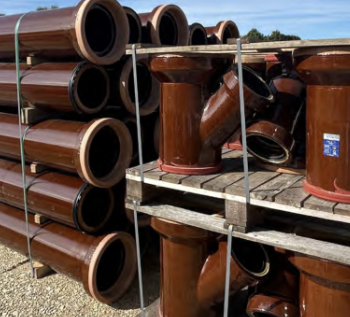
Why vitrified clay pipes are reclaiming their role in built projects.

Research by construction PR consultancy LMC published.
Roles and responsibilities of domestic clients

ACA Safety in Construction guide for domestic clients.
Fire door compliance in UK commercial buildings

Architect and manufacturer gives their low down.
Plumbing and heating for sustainability in new properties

Technical Engineer runs through changes in regulations, innovations in materials, and product systems.
Awareness of the Carbon Border Adjustment Mechanism
What CBAM is and what to do about it.
The new towns and strategic environmental assessments
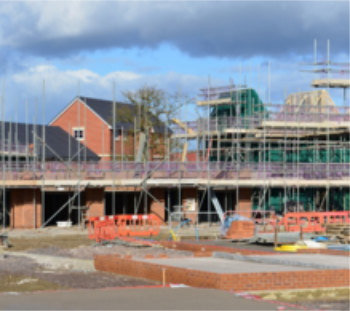
12 locations of the New Towns Taskforce reduced to 7 within the new towns draft programme and open consultation.
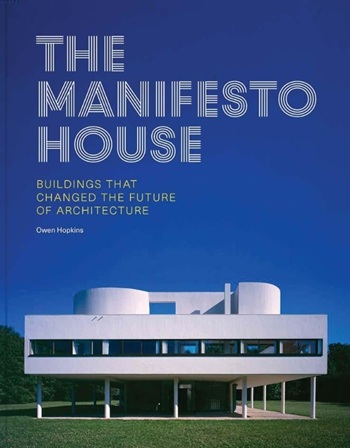
Buildings that changed the future of architecture. Book review.
The Sustainability Pathfinder© Handbook
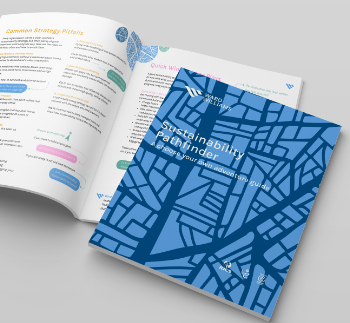
Built environment agency launches free Pathfinder© tool to help businesses progress sustainability strategies.

Government outcome to the late payment consultation, ECA reacts.
IHBC 2025 Gus Astley Student Award winners

Work on the role of hewing in UK historic conservation a win for Jack Parker of Oxford Brookes University.
Future Homes Building Standards and plug-in solar
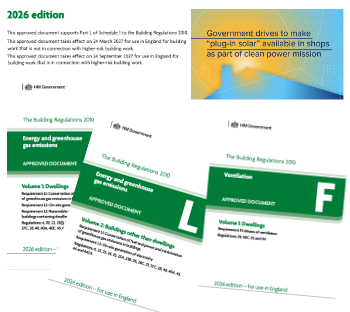
Parts F and L amendments, the availability of solar panels and industry responses.
How later living housing can help solve the housing crisis

Unlocking homes, unlocking lives.
Preparing safety case reports for HRBs under the BSA
A new practical guide to preparing structural inputs for safety cases and safety case reports published by IStructE.
Male construction workers and prostate cancer

CIOB and Prostate Cancer UK encourage awareness of prostate cancer risks, and what to do about it.