





Holocene
Climate Change 2021 – The Physical Science Basis, Annex VII: Glossary, written by the Intergovernmental Panel on Climate Change (IPCC) and published by Cambridge University Press in 2023, defines Holocene as: ‘The current interglacial geological epoch, the second of two epochs within the Quaternary Period, the preceding being the Pleistocene. The International Commission on Stratigraphy (ICS) defines the start of the Holocene Epoch at 11,700 years before 2000 (Walker et al., 2019) spanning the interval from 11,700 yr to the present day. Together with the subadjacent Pleistocene, it comprises the Quaternary System/Period. The Holocene record contains diverse geomorphological, biological, climatological and archaeological evidence, within sequences that are often continuous and extremely well-preserved at decadal, annual and even seasonal resolution. As a consequence, the Holocene is perhaps the most intensively studied series/epoch within the entire Geological Time Scale. Yet until recently little attention had been paid to a formal subdivision of the Holocene. Here we describe an initiative by the Subcommission on Quaternary Stratigraphy (SQS. It encompasses the mid-Holocene (MH), the 1000-year-long interval centred at 6000 years before 1950; a period of long-standing focus for climate modelling, with enhanced seasonality in the Northern Hemisphere and decreased seasonality in the Southern Hemisphere. The early part of the Holocene is marked by the late stages of deglaciation of Pleistocene land ice, sea level rise, and the occurrence of warm phases that affected different regions at different times, often referred to as the ‘Holocene Thermal Maximum’. In addition, the epoch includes the post-glacial interval, which began approximately 7000 years ago when the fundamental features of the modern climate system were essentially in place, as the influence of remnant Pleistocene ice sheets waned.’
Deposit Modelling and Archaeology, Guidance for Mapping Buried Deposits, published by Historic England on 31 January 2020, suggests that ‘Holocene’ refers to: ‘The youngest part of the Quaternary period, encompassing the last 11,000 years of geological time. It is often referred to as the postglacial period.'
Green infrastructure and open environments: London’s foundations: protecting the geodiversity of the capital, Supplementary Planning Guidance, published by the Mayor of London in March 2012, defines Holocene as: ‘The youngest epoch of the Quaternary Sub-Era. Covers the last 11 800 years. Part of the Cenozoic Era. The concept of the Holocene ending at the end of the 18th Century is gaining ground, with the following Epoch termed the Anthropocene.’
[edit] Related articles on Designing Buildings Wiki
Featured articles and news
Costs and insolvencies mount for SMEs, despite growth

Construction sector under insolvency and wage bill pressure in part linked to National Insurance, says report.
The place for vitrified clay pipes in modern infrastructure
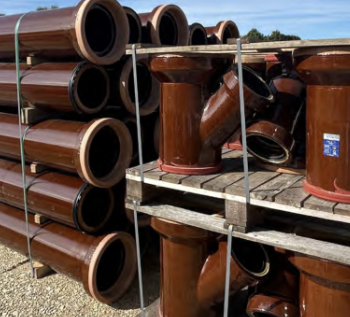
Why vitrified clay pipes are reclaiming their role in built projects.

Research by construction PR consultancy LMC published.
Roles and responsibilities of domestic clients

ACA Safety in Construction guide for domestic clients.
Fire door compliance in UK commercial buildings

Architect and manufacturer gives their low down.
Plumbing and heating for sustainability in new properties
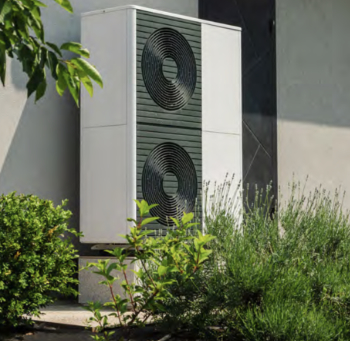
Technical Engineer runs through changes in regulations, innovations in materials, and product systems.
Awareness of the Carbon Border Adjustment Mechanism
What CBAM is and what to do about it.
The new towns and strategic environmental assessments
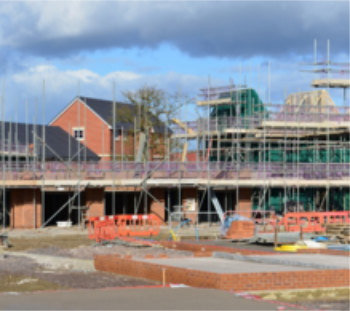
12 locations of the New Towns Taskforce reduced to 7 within the new towns draft programme and open consultation.
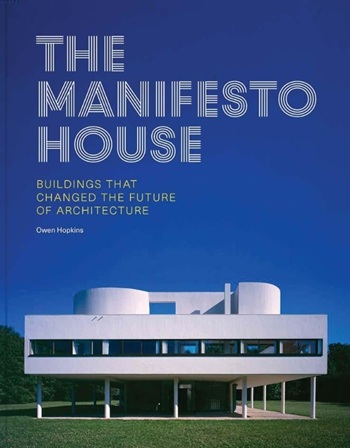
Buildings that changed the future of architecture. Book review.
The Sustainability Pathfinder© Handbook
Built environment agency launches free Pathfinder© tool to help businesses progress sustainability strategies.

Government outcome to the late payment consultation, ECA reacts.
IHBC 2025 Gus Astley Student Award winners

Work on the role of hewing in UK historic conservation a win for Jack Parker of Oxford Brookes University.
Future Homes Building Standards and plug-in solar
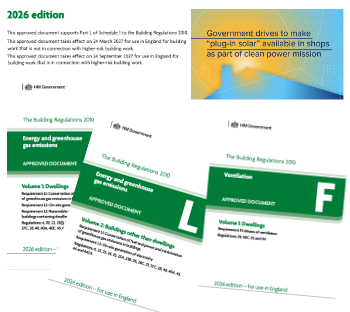
Parts F and L amendments, the availability of solar panels and industry responses.
How later living housing can help solve the housing crisis

Unlocking homes, unlocking lives.
Preparing safety case reports for HRBs under the BSA
A new practical guide to preparing structural inputs for safety cases and safety case reports published by IStructE.
Male construction workers and prostate cancer

CIOB and Prostate Cancer UK encourage awareness of prostate cancer risks, and what to do about it.