






Electrical sector skills recharge at the House of Commons, as skills shortage bites

Contents |
[edit] ECA recharges electrical skills at the House of Commons long-awaited Parliamentary event
Held in the House of Commons in Westminster, Recharging Electrical Skills was a landmark meeting with Members, skills providers and MPs, aimed at increasing awareness about the significance of the electrical contracting sector and electrical skills in achieving the UK's net zero goals.
Key themes from the event included:
- Placing skilled electricians at the core of net zero.
- The need for more apprentice starts and qualified electricians.
- Improved support for job placements a more robust skills pipeline.
The reception opened with remarks from Alan Whitehead MP, our event sponsor, followed by comments from Andrew Eldred, ECA Director of Workforce and Public Affairs.
Alan Whitehead MP, Shadow Energy Minister, said: “Labour’s mission to make Britain a clean energy superpower will create and sustain good jobs across the country. Electricians will be absolutely crucial for delivering many of the low-carbon technologies that will form the backbone of our future green economy.
"We need to make sure that our skills system is set up to train the electricians of the future and meet the growing needs of households and businesses in the transition to cheaper, cleaner energy.”
As part of the event, we also launched the 'Future Electrical Skills' Framework, setting out the ECA’s recommendations to bridge the electrician skills gap, accelerate the adoption of low carbon technologies, and ensure high-quality and safe installation and integration of electrical systems.
[edit] ECA's Recharging Electrical Skills Charter
ECA Members and other guests had the opportunity to sign ECA's Recharging Electrical Skills Charter, to show their support for these policy positions.
View the full Charter here.
Electrical contracting businesses will play a pivotal role in the transition to a net-zero economy by ensuring the safe, efficient, and sustainable use of electrotechnical systems, including those central to net zero. But workforce capacity and competence must be prioritised if we are to achieve our net-zero goals.
Shortages of qualified electricians and other competent personnel are currently the number one business issue for ECA Members (as revealed each quarter by the ECA/ BESA Building Engineering Business Survey). These shortages do not necessarily result from a lack of people wanting to join the industry, but more so from a broken skills pipeline which currently prevents enough people from progressing to complete their training.

[edit] Electrical sector feels skills shortage bite
The latest quarterly survey of the UK engineering services sector, backed by leading trade bodies ECA, BESA, SELECT and SNIPEF, reveals that electrotechnical businesses are being significantly impacted by skills and labour shortages. Meanwhile, most business owners in the sector continue to grapple with high prices and slow payment times.
Almost a third of respondents (30%) said their business’ turnover had dropped since Q2 – a marked increase since the last survey, covering Q1 and Q2, when just 1 in 5 respondents (19%) said their turnover had fallen since the start of the year. A fifth (21%) expect their turnover to fall again between now and the end of the year.
Nearly 2 in 5 respondents (38%) cited labour shortages as the biggest threat to their business. Other major concerns include delays to projects (20%) and cashflow (17%).
Of the respondents who currently have vacancies in their business, trouble filling those vacancies was blamed on pay expectations being too high (57%), applicants lacking sufficient skills (46%) and an insufficient number of applicants (41%).
When it comes to being paid on time, almost two thirds (57%) of respondents said that commercial clients and main contractors took 31 to 60 days to pay for work. Over 1 in 10 (21%) said they took 61 to 90 days – a drop of 50% since the last survey, indicating some improvement.
Payment times appear to have slowed in the public sector, with more than half (51%) of respondents saying public sector clients took 31 to 60 days to pay for work, and a tenth (9%) saying they took 61 to 90 days.
This article appears on the ECA news and blog site as "ECA Recharges Electrical Skills at the House of Commons" and "Electrical sector feels skills shortage bite" dated November 29, 2023.
--ECA
[edit] Related articles on Designing Buildings
- Apprenticeships levy.
- Cabinet office payment rules within the procurement act welcomed.
- Call for support in green electrical apprentice shortfall.
- Construction Industry Training Board CITB.
- ECA helps Welsh Government consultation on Net Zero Skills..
- ECA Project Net Zero roadshow..
- Electrical skills shortage in Eastern England.
- Engineering services industry grapples with rising demand and skills shortage.
- Impact of labour shortages worsen for engineering services.
- National Infrastructure Plan for Skills.
- Net Zero not possible without right skills..
- Order books fill but skills shortages worry contractors.
- Protection for apprenticeships.
- Put electricians at the heart of the clean energy transition, says ECA.
- Skilled workforce unable to meet net zero ambitions.
- Skills shortage.
- Skills shortage and Brexit.
Featured articles and news
Costs and insolvencies mount for SMEs, despite growth

Construction sector under insolvency and wage bill pressure in part linked to National Insurance, says report.
The place for vitrified clay pipes in modern infrastructure

Why vitrified clay pipes are reclaiming their role in built projects.

Research by construction PR consultancy LMC published.
Roles and responsibilities of domestic clients

ACA Safety in Construction guide for domestic clients.
Fire door compliance in UK commercial buildings

Architect and manufacturer gives their low down.
Plumbing and heating for sustainability in new properties

Technical Engineer runs through changes in regulations, innovations in materials, and product systems.
Awareness of the Carbon Border Adjustment Mechanism
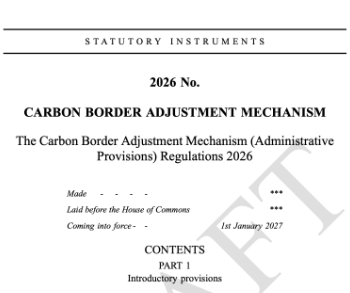
What CBAM is and what to do about it.
The new towns and strategic environmental assessments

12 locations of the New Towns Taskforce reduced to 7 within the new towns draft programme and open consultation.

Buildings that changed the future of architecture. Book review.
The Sustainability Pathfinder© Handbook
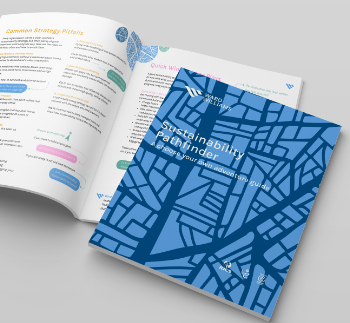
Built environment agency launches free Pathfinder© tool to help businesses progress sustainability strategies.

Government outcome to the late payment consultation, ECA reacts.
IHBC 2025 Gus Astley Student Award winners

Work on the role of hewing in UK historic conservation a win for Jack Parker of Oxford Brookes University.
Future Homes Building Standards and plug-in solar

Parts F and L amendments, the availability of solar panels and industry responses.
How later living housing can help solve the housing crisis

Unlocking homes, unlocking lives.
Preparing safety case reports for HRBs under the BSA

A new practical guide to preparing structural inputs for safety cases and safety case reports published by IStructE.
Male construction workers and prostate cancer

CIOB and Prostate Cancer UK encourage awareness of prostate cancer risks, and what to do about it.