





Survey and Assessment of Traditionally Constructed Brickwork

Survey and Assessment of Traditionally Constructed Brickwork, Moses Jenkins, Routledge 2022, 246 pages, 193 colour and two black-and-white illustrations, paperback.
This textbook provides a practical guide to traditional brickwork for specifiers, contractors and students. After a general introduction to survey and assessment aims and processes, the book gives an interesting historical outline of the manufacture of bricks, the development of mortars and the construction of brickwork, from the medieval period through to the first world war. The aim here is to help people understand what they need to look out for when carrying out a survey. Technical issues such as the differences in strength and durability arising from the brick bond, the mortars used and the brick units themselves are outlined, together with those aspects which affect the significance of brickwork, historically, aesthetically and technically. All these aspects need to be noted when surveying and assessing historic brickwork, as each has a bearing on the specification of repairs, conservation work and retrofits.
The book is logically structured so readers can dip in and out when they need to, with further chapters on technical characteristics, decorative characteristics, age and significance, defects and specialist investigation techniques. This last chapter includes sections on the analysis of mortar components and salts, the assessment of brick strength and moisture movement, the use of thermography and a wide range of other site-based investigative techniques such as microwaves and radiography.
The author, Moses Jenkins, is senior technical officer with Historic Environment Scotland (HES), leading its technical research into brickwork and teaching on its courses at The Engine Shed. Other specialists in this field have contributed case studies and other information to the book, including Gerard Lynch, Bill Reevie, Nicola Ashurst and several of the author’s colleagues at HES. The scope of the publication reflects this impeccable pedigree.
This article originally appeared as ‘Brick technology’ in the Institute of Historic Building Conservation’s (IHBC’s) Context 183, published in March 2025. It was written by Jonathan Taylor, Cathedral Communications.
--Institute of Historic Building Conservation
Related articles on Designing Buildings Conservation.
IHBC NewsBlog
How could the City of London skyline look in 6 years' time?

Visualisation shows approved planning applications as completed buildings
National Trust for Scotland calls for VAT cuts

Heritage neglect is encouraged by current policies
IHBC's 'Context' Issue 186 features Industrial Heritage
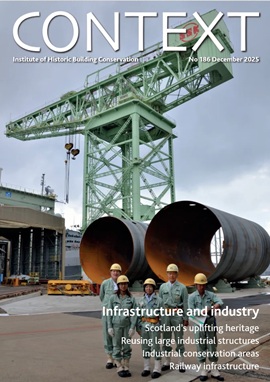
IHBC's members' journal reports on the challenges of conserving infrastructure.
Book now for IHBC Annual School 2026

IHBC Annual School is taking place 18-20 June 2026 in Newcastle.
RICHeS Research Infrastructure offers ‘Full Access Fund Call’

RICHeS offers a ‘Help’ webinar on 11 March
Latest IHBC Issue of Context features Roofing
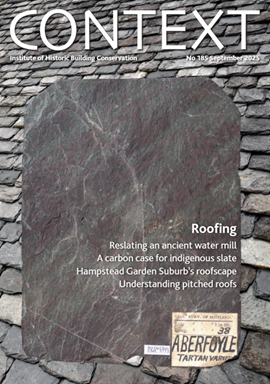
Articles range from slate to pitched roofs, and carbon impact to solar generation to roofscapes.
Three reasons not to demolish Edinburgh’s Argyle House
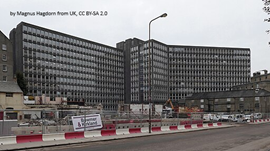
Should 'Edinburgh's ugliest building' be saved?
IHBC’s 2025 Parliamentary Briefing...from Crafts in Crisis to Rubbish Retrofit
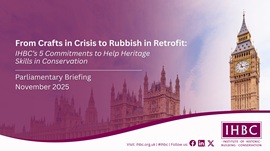
IHBC launches research-led ‘5 Commitments to Help Heritage Skills in Conservation’
How RDSAP 10.2 impacts EPC assessments in traditional buildings
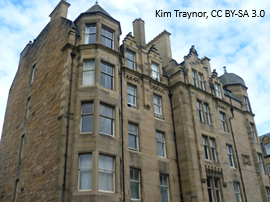
Energy performance certificates (EPCs) tell us how energy efficient our buildings are, but the way these certificates are generated has changed.
700-year-old church tower suspended 45ft
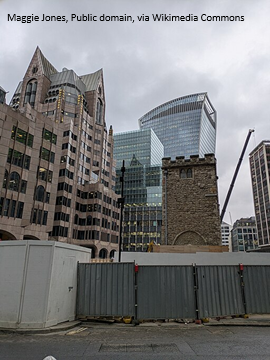
The London church is part of a 'never seen before feat of engineering'.