





Local planning authority
The local planning authority is usually the planning department of the district or borough council.
The National Planning Policy Framework (NPPF) defines a local planning authority as, 'the public authority whose duty it is to carry out specific planning functions for a particular area. All references to local planning authority apply to the district council, London borough council, county council, Broads Authority, National Park Authority and the Greater London Authority, to the extent appropriate to their responsibilities.'
The planning portal provides a service enabling people to find out who their local planning authority is: Find a local planning authority.
Very broadly, the responsibilities of the local planning authority include;
- Producing a local plan: This is a framework for the future development of an area defining strategic policies, the framework for neighbourhood plans, land allocations, infrastructure requirements housing needs, requirements for safeguarding the environment, measures for adapting to climate change and so on. (See Local plan). Local plans are also the starting-point for considering whether planning applications should be approved. The framework states that If a plan is absent, silent or out of date, permission should be granted, unless there are significant and demonstrable reasons not to grant permission.
- Determining planning applications. Decisions about straight-forward applications will be made under powers delegated to planning officers. More significant or contentious applications will be decided by a planning committee, made up of local councillors. In determining planning applications the local planning authority will consult with the local community, statutory consultees and non-statutory consultees.
- Supporting neighbourhood planning.
The National Planning Policy Framework requires that plan making and decision taking:
- 'Should be genuinely plan-led.
- Should be a creative exercise, not just one of scrutiny.
- Should be proactive in driving and supporting sustainable development.
- Should seek and secure high quality.
- Should take account of the diverse character of different areas.
- Should support the transition to a climate-resilient, low-carbon economy.
- Should contribute to conserving and enhancing the natural environment and reducing pollution.
- Should encourage the use of brownfield land.
- Should encourage mixed-use development.
- Should conserve heritage.
- Should maximise the use of public transport, walking and cycling.
- Should support health, social and cultural wellbeing.'
Local planning authorities can be placed under special measures if they fail to determine 70% or more of the major applications they handle within 13 weeks (applications for 10 homes or more, or the equivalent commercial floorspace), or if more than 20% of major applications decisions are overturned on appeal.
Local planning authorities under special measures will have applications determined by the planning inspectorate and will lose a proportion of the application fee. Special measures designation will be reviewed annually to allow improving authorities to regain their determination powers.
[edit] Related articles on Designing Buildings
- Delegated powers.
- Government departments responsibility for construction.
- Enforcement notice.
- Local authority.
- Local government.
- Local plan.
- National Planning Policy Framework.
- Neighbourhood planning.
- Planning authority.
- Planning permission.
- Public authority.
- Public building.
- STBA report to provide blueprint for post-COVID recovery.
- Stop notice.
- Temporary stop notice.
- Town and Country Planning (Local Planning) (England) Regulations 2012.
[edit] External references
Featured articles and news
Costs and insolvencies mount for SMEs, despite growth

Construction sector under insolvency and wage bill pressure in part linked to National Insurance, says report.
The place for vitrified clay pipes in modern infrastructure
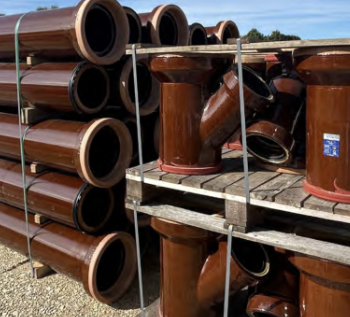
Why vitrified clay pipes are reclaiming their role in built projects.

Research by construction PR consultancy LMC published.
Roles and responsibilities of domestic clients

ACA Safety in Construction guide for domestic clients.
Fire door compliance in UK commercial buildings

Architect and manufacturer gives their low down.
Plumbing and heating for sustainability in new properties

Technical Engineer runs through changes in regulations, innovations in materials, and product systems.
Awareness of the Carbon Border Adjustment Mechanism
What CBAM is and what to do about it.
The new towns and strategic environmental assessments
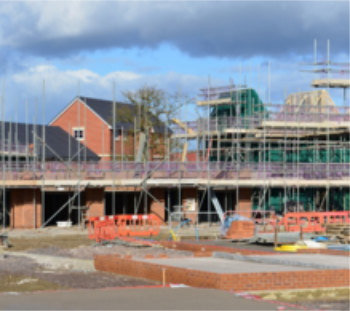
12 locations of the New Towns Taskforce reduced to 7 within the new towns draft programme and open consultation.
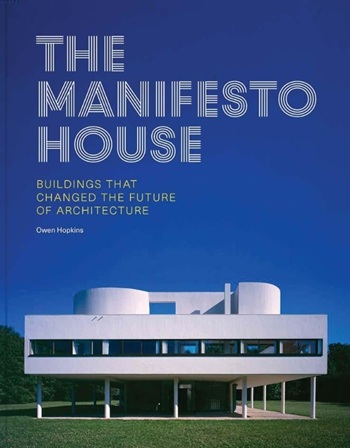
Buildings that changed the future of architecture. Book review.
The Sustainability Pathfinder© Handbook
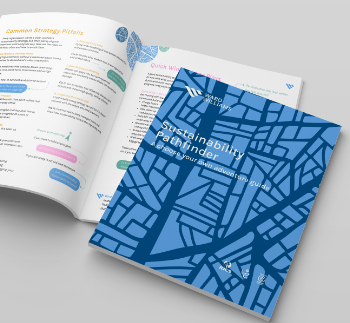
Built environment agency launches free Pathfinder© tool to help businesses progress sustainability strategies.
Government outcome to the late payment consultation, ECA reacts.
IHBC 2025 Gus Astley Student Award winners

Work on the role of hewing in UK historic conservation a win for Jack Parker of Oxford Brookes University.
Future Homes Building Standards and plug-in solar
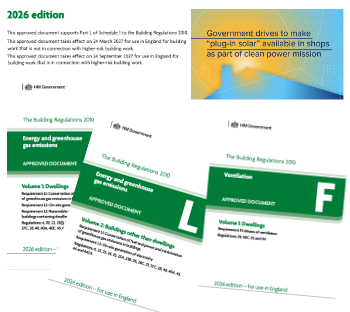
Parts F and L amendments, the availability of solar panels and industry responses.
How later living housing can help solve the housing crisis
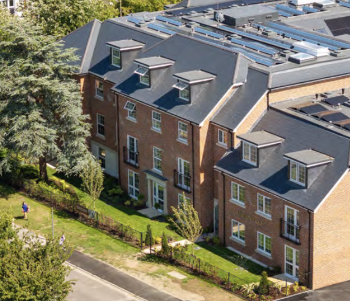
Unlocking homes, unlocking lives.
Preparing safety case reports for HRBs under the BSA
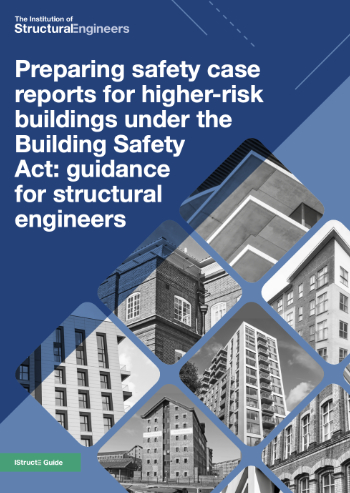
A new practical guide to preparing structural inputs for safety cases and safety case reports published by IStructE.
Male construction workers and prostate cancer

CIOB and Prostate Cancer UK encourage awareness of prostate cancer risks, and what to do about it.
Comments
To start a discussion about this article, click 'Add a comment' above and add your thoughts to this discussion page.