





About Yiqi Wang
 Student
 In my opinion, sharing space and maximizing the use of natural factors to obtain lighting, achieve air circulation, indoor ventilation and water heating to reduce carbon emissions of the building.
Assuming a Hexagonal prism as a unit of the building, which can consist of one or two or three or thousands of units. The building could have different shape and different function via increase or decrease units. The shape of Hexagonal prism imitates honeycomb, which satisfies the lowest material to achieve the largest space.

Hexagonal prism
Shape 1

Shape 2

Shape 3
Sharing Space and changing function: If people or family members can take advantage of the public area, such as kitchen, activity room, and dining room, to reduce duplication of architectural space, which can achieve lower carbon emissions. Of course, taking into account the privacy of residence, the suitable layout and orientation of different areas are important. With the unit of the Hexagonal prism, the building can be changed all the time and it can be the private apartment, gallery, library, commercial office and every potential function, which save carbon emission within the limited space in some case.

The shape can get inrregular change and increase the extension to make the overlapping of the public space.
Lightening: Making the best orientation of the space to get advantage of the natural lightening, such as making the lightning well, increase the dimension of the window and setting the building in the northward.
Ventilation: Hexagonal prism can take the advantage of its variability which can make adjustment of ventilation with the change of the site and the season to make a natural ventilation.
Featured articles
Check out some of the best features and news from Designing Buildings as well as key stories from around the web.
New measures to stop people being ripped off

Government to protect families from cowboy builders and aggressive bailiffs.

New Futurebuild showcase brings an innovation-first approach.
National Planning Policy Framework
Understanding the 2026 changes.
ECA's public affairs priorities

Member consultation opens to shape priorities for 2027 to 2030.

Dutyholder responsibilities from 1 July 2026.
Where performance meets practice

The Building Envelope Stage at UKCW Birmingham.

CIAT publishes briefing on planning reforms.
Leaders in Learning for Practice Network

Call for conservation leaders in learning to register interest in new network.
The importance of early engagement

Construction lessons from the Trillium HealthWorks Experience Centre.
Mayors are to be given planning call in powers
Mayors across England will be able to make the most important planning decisions.
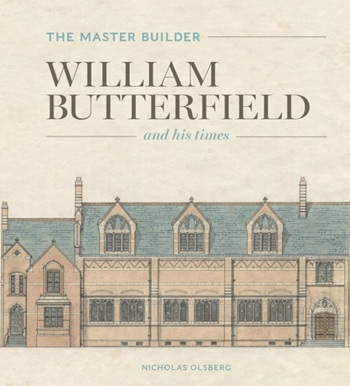
The Master Builder: William Butterfield and his times. Book review.

Why construction can't afford to ignore the skills gap.