






Growing space
For the purposes of the Home Quality Mark (HQM), growing space can be considered to be any one or more of the following:
- Food planters.
- Private gardens.
- Allotments.
- Community gardens or community orchards.
- Roof top growing space.
- Raised beds dedicated for growing food (this is a particularly useful approach where the soil conditions are poor as they can be artificially filled with good quality soil).
- Greenhouses or polytunnels.
This space could be provided in private gardens, balconies or roof terraces.
Where growing space is not provided in a garden bed, facilities to enable food growing (i.e. planters or equivalent) must be in place at handover and must be fixed in place (i.e. a free-standing planter would not be accepted).
Where communal growing space is provided it must be:
- Located within 500m of the entrance from all homes on site.
- Have clear ownership arrangements.
- A clearly-designated growing space, for example use of planting or fencing around the perimeter, or in the case of communal areas contain signage.
- Ideally south facing and not in an area that is heavily shaded.
- Contain suitable soil conditions and depths.
- Sheltered from the wind on the perimeter, for example trees, hedges or other boundary protection.
- Designed to be accessible to all users, for example through the provision of raised beds.
- Located near a rain water collection system, such as a rainwater butt.
Ref Home Quality Mark One, Technical Manual SD239, England, Scotland & Wales, published by BRE in 2018.
[edit] Related articles on Designing Buildings Wiki
Featured articles and news
Costs and insolvencies mount for SMEs, despite growth
Construction sector under insolvency and wage bill pressure in part linked to National Insurance, says report.
The place for vitrified clay pipes in modern infrastructure
Why vitrified clay pipes are reclaiming their role in built projects.
Research by construction PR consultancy LMC published.
Roles and responsibilities of domestic clients

ACA Safety in Construction guide for domestic clients.
Fire door compliance in UK commercial buildings

Architect and manufacturer gives their low down.
Plumbing and heating for sustainability in new properties
Technical Engineer runs through changes in regulations, innovations in materials, and product systems.
Awareness of the Carbon Border Adjustment Mechanism
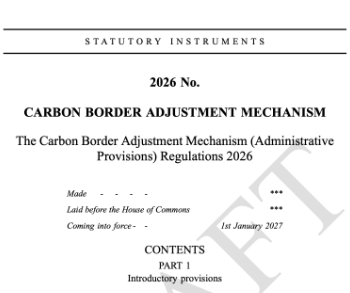
What CBAM is and what to do about it.
The new towns and strategic environmental assessments
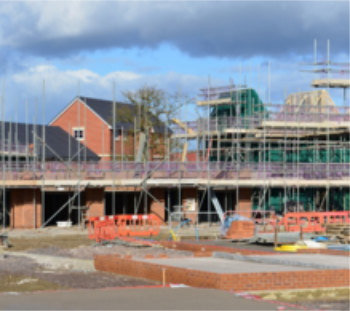
12 locations of the New Towns Taskforce reduced to 7 within the new towns draft programme and open consultation.
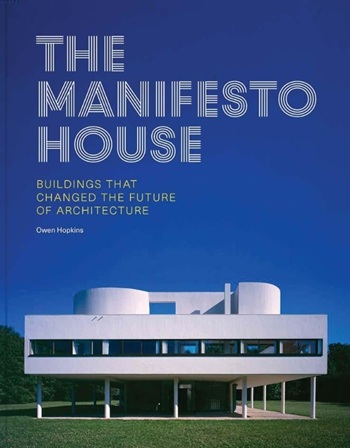
Buildings that changed the future of architecture. Book review.
The Sustainability Pathfinder© Handbook
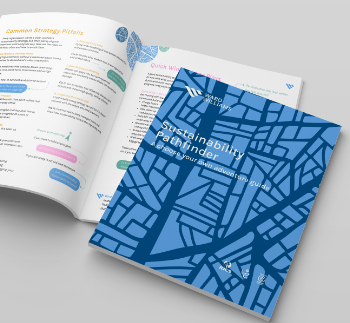
Built environment agency launches free Pathfinder© tool to help businesses progress sustainability strategies.

Government outcome to the late payment consultation, ECA reacts.
IHBC 2025 Gus Astley Student Award winners

Work on the role of hewing in UK historic conservation a win for Jack Parker of Oxford Brookes University.
Future Homes Building Standards and plug-in solar
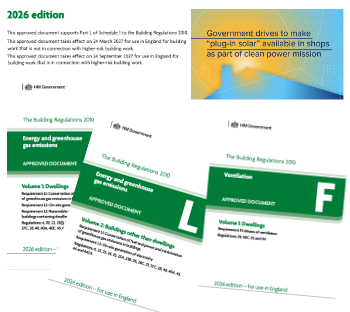
Parts F and L amendments, the availability of solar panels and industry responses.
How later living housing can help solve the housing crisis
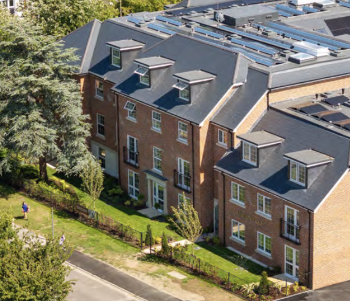
Unlocking homes, unlocking lives.
Preparing safety case reports for HRBs under the BSA
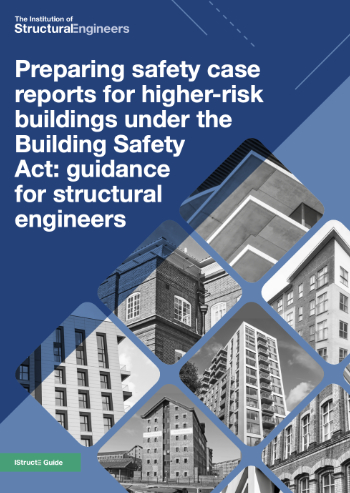
A new practical guide to preparing structural inputs for safety cases and safety case reports published by IStructE.
Male construction workers and prostate cancer

CIOB and Prostate Cancer UK encourage awareness of prostate cancer risks, and what to do about it.