





Viaduct

|
| Ribblehead Viaduct |
The term viaduct was coined in the early nineteenth century, modelled on the Roman aqueduct. Unlike aqueducts, which conveyed water, viaducts were developed to carry roads or railways. Classical Roman engineers did build long, multi-span bridges for transport, but these were typically described simply as bridges. The conceptual distinction between a single crossing and a long, repetitive structure emerged much later, alongside industrial-era infrastructure.
The difference between a viaduct and a bridge is mainly one of scale, form and context, rather than strict engineering principles. A bridge is a general term for any structure that carries a route over an obstacle such as a river, road, railway or valley. It is typically conceived as a single crossing between two points.
A viaduct is a specific type of bridge distinguished by its length and repetition. It usually consists of a series of similar spans supported by multiple piers, carrying a route across a wide area of low ground rather than a single, clearly defined obstacle.
Historically, the distinction became clearer during the nineteenth century with the expansion of railways. Engineers needed long, elevated structures to maintain consistent gradients, and the term viaduct was adopted to describe these multi-span crossings.
The rapid development of viaducts is closely associated with the railway age. From the 1830s onwards, railways required routes with gentle gradients and large-radius curves. Viaducts offered a solution where embankments would have been impractically large or unstable. Early railway viaducts in Britain were predominantly built from brick or stone, using multiple arches supported on piers. This form allowed loads to be distributed efficiently while using familiar materials and construction techniques.
During the nineteenth century, viaducts became symbols of industrial ambition and technical confidence. Structures such as the Sankey Viaduct and the Ribblehead Viaduct demonstrated how repetitive masonry spans could achieve great length and height while maintaining visual coherence. In urban areas, viaducts enabled railways to pass above streets and buildings, reshaping cities.
The twentieth century brought significant changes in materials and structural behaviour. Steel and later reinforced and prestressed concrete allowed longer spans, fewer piers and slimmer profiles. Viaducts were no longer limited to arches; beam, girder and box structures became common, particularly for motorways and high-speed rail. Construction methods also evolved, with incremental launching and segmental construction reducing the need for extensive temporary works.
In the modern context, viaducts serve a wide range of transport functions. They carry roads, railways, and light rail systems across complex landscapes and dense urban environments. Increasingly, they are also designed with environmental and social considerations in mind, allowing wildlife movement, water flow and public space beneath. In some cases, redundant viaducts have been adapted for new uses, such as linear parks, pedestrian routes or cultural venues.
Completed in 2003, The Millau Viaduct is a multi span cable stayed bridge that links the two sides of the A75 connecting Paris to Barcelona and relieving Millau's roads from summer gridlock. The project pushed engineering boundaries with the viaduct being built across one of the deepest valleys in France, taller than the Eiffel Tower.
For more information see: The Millau Viaduct.
[edit] Related articles on Designing Buildings
Featured articles and news
Costs and insolvencies mount for SMEs, despite growth
Construction sector under insolvency and wage bill pressure in part linked to National Insurance, says report.
The place for vitrified clay pipes in modern infrastructure
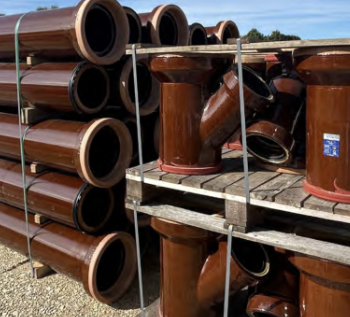
Why vitrified clay pipes are reclaiming their role in built projects.

Research by construction PR consultancy LMC published.
Roles and responsibilities of domestic clients

ACA Safety in Construction guide for domestic clients.
Fire door compliance in UK commercial buildings

Architect and manufacturer gives their low down.
Plumbing and heating for sustainability in new properties

Technical Engineer runs through changes in regulations, innovations in materials, and product systems.
Awareness of the Carbon Border Adjustment Mechanism
What CBAM is and what to do about it.
The new towns and strategic environmental assessments
12 locations of the New Towns Taskforce reduced to 7 within the new towns draft programme and open consultation.
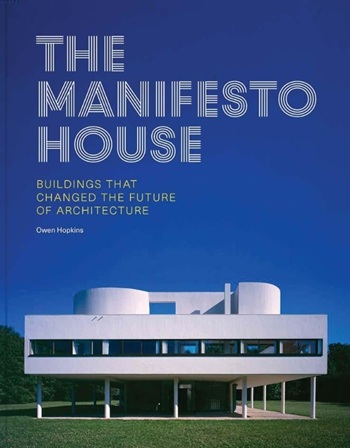
Buildings that changed the future of architecture. Book review.
The Sustainability Pathfinder© Handbook
Built environment agency launches free Pathfinder© tool to help businesses progress sustainability strategies.

Government outcome to the late payment consultation, ECA reacts.
IHBC 2025 Gus Astley Student Award winners

Work on the role of hewing in UK historic conservation a win for Jack Parker of Oxford Brookes University.
Future Homes Building Standards and plug-in solar
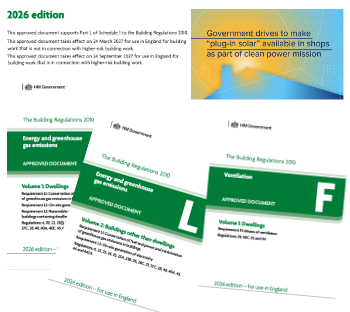
Parts F and L amendments, the availability of solar panels and industry responses.
How later living housing can help solve the housing crisis
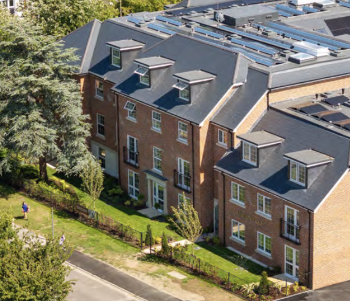
Unlocking homes, unlocking lives.
Preparing safety case reports for HRBs under the BSA
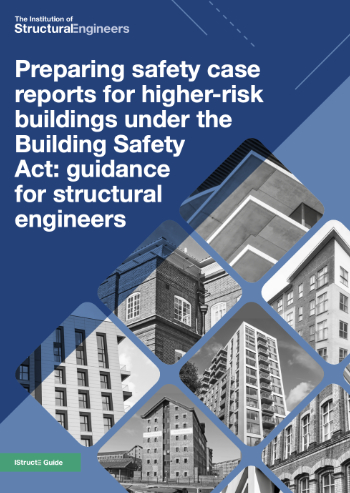
A new practical guide to preparing structural inputs for safety cases and safety case reports published by IStructE.
Male construction workers and prostate cancer

CIOB and Prostate Cancer UK encourage awareness of prostate cancer risks, and what to do about it.